ADNOC Chief Calls for a Global Energy Security Rethink as Hormuz Disruption Drains Oil Stocks
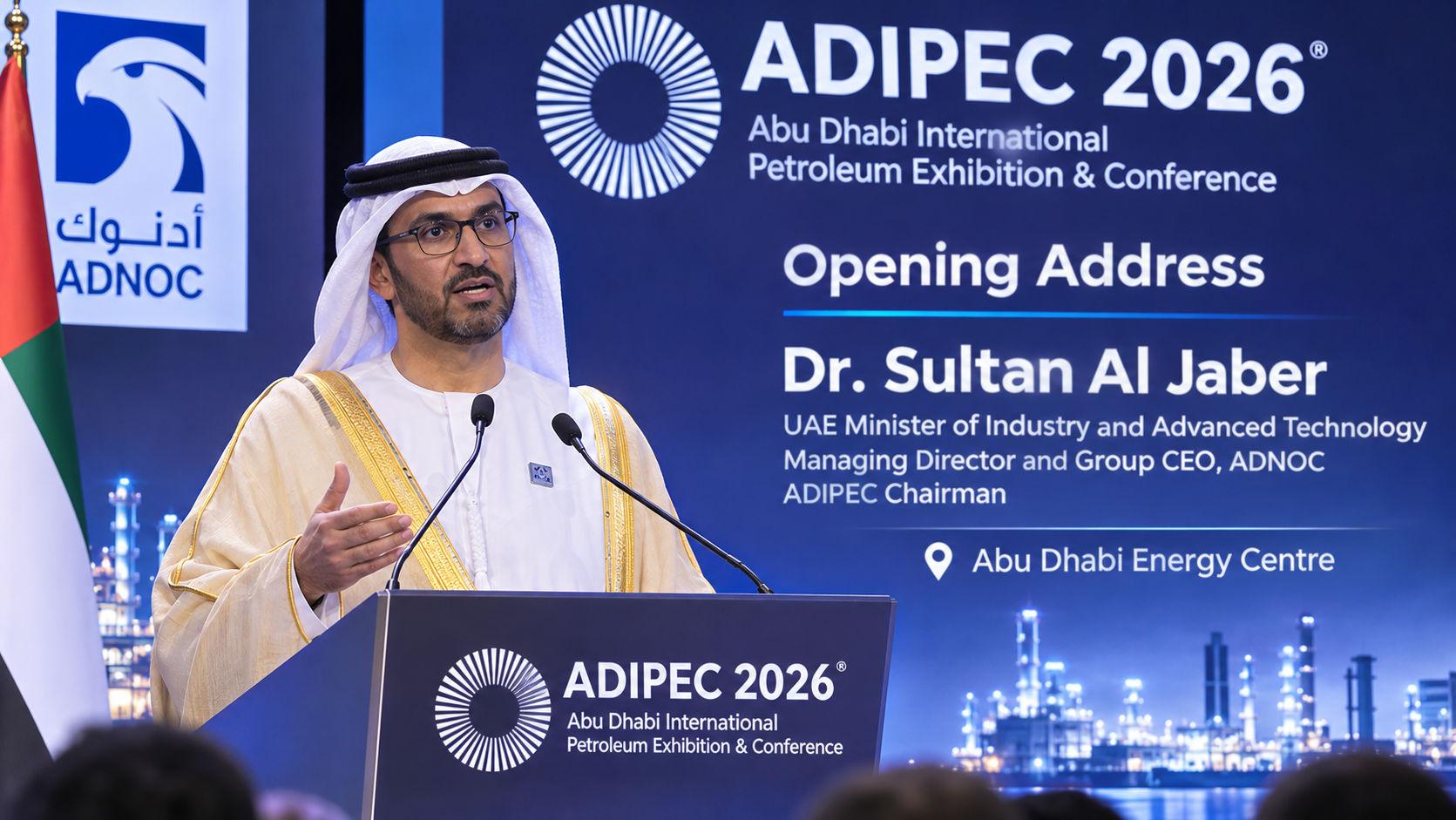
Opening ADIPEC 2026, ADNOC chief Sultan Al Jaber said the world has run down its energy safety margins and set out five priorities to rebuild them. He pointed to depleted inventories and a sharp rise in the share of oil costs taken up by logistics.
The head of ADNOC used the opening of ADIPEC 2026 to deliver a blunt assessment of the world's energy system: the safety margins have worn thin, and rebuilding them will take deliberate investment.
Dr Sultan Ahmed Al Jaber, who is UAE Minister of Industry and Advanced Technology as well as ADNOC's Managing Director and Group CEO, told delegates on Monday that disruption to shipping through the Strait of Hormuz has drained inventories and pushed up the cost of moving fuel to market. "The world has eroded its supply buffers," he said.
The numbers behind the warning
Al Jaber said almost one billion barrels of crude have been withdrawn from global inventories since the disruption began. In some markets, he added, diesel stocks have fallen to their lowest seasonal levels in 35 years, and certain markets are facing an LNG supply gap of around 600 billion cubic feet.
The sharpest figure concerned logistics. Before the disruption, transport accounted for less than 5 per cent of the cost of a barrel of oil. It now makes up more than 30 per cent, he said. His argument followed from that: energy security can no longer be judged by production capacity alone, but also by whether supplies can reach customers while routes are under pressure.
A note on the data. The inventory figure is Al Jaber's own. An analysis of the speech published the same day by the energy-sector site Energy News observed that International Energy Agency measurements point to a cumulative stock drawdown well below the numbers quoted by industry executives. Readers should treat the figures as the ADNOC chief's assessment, not an agreed global tally.
Five priorities for rebuilding resilience
Al Jaber outlined five areas for action.
Reserves and refining. Larger strategic oil reserves, bigger fuel stockpiles and more flexible refining capacity located closer to end users.
Logistics. Investment in transport infrastructure so that international energy flows can continue during disruptions.
Artificial intelligence. Wider use of AI to anticipate risks, improve operations and bring production costs down.
Policy and finance. Government policies that encourage investment, together with support from banks and insurers to keep energy trade moving.
People. The workforce, which he said remains responsible for keeping supply systems running when conditions turn difficult.
Why logistics has moved to the centre
The shift in emphasis is striking coming from a producer. For decades, energy security debates in import-dependent economies have centred on supply: who holds the resource, who controls it, who can be relied on to sell. Al Jaber's remarks move attention downstream, to storage, shipping, insurance and the location of refineries. A barrel that cannot be delivered at a workable cost offers little security to the country waiting for it.
The message also reflects the UAE's own position. As one of the Gulf's major exporters, the country has an obvious commercial interest in open shipping lanes and predictable transit costs, and the speech made the case that producers, shippers, financiers and governments all carry part of the responsibility for keeping energy moving.
AI, and the question of power
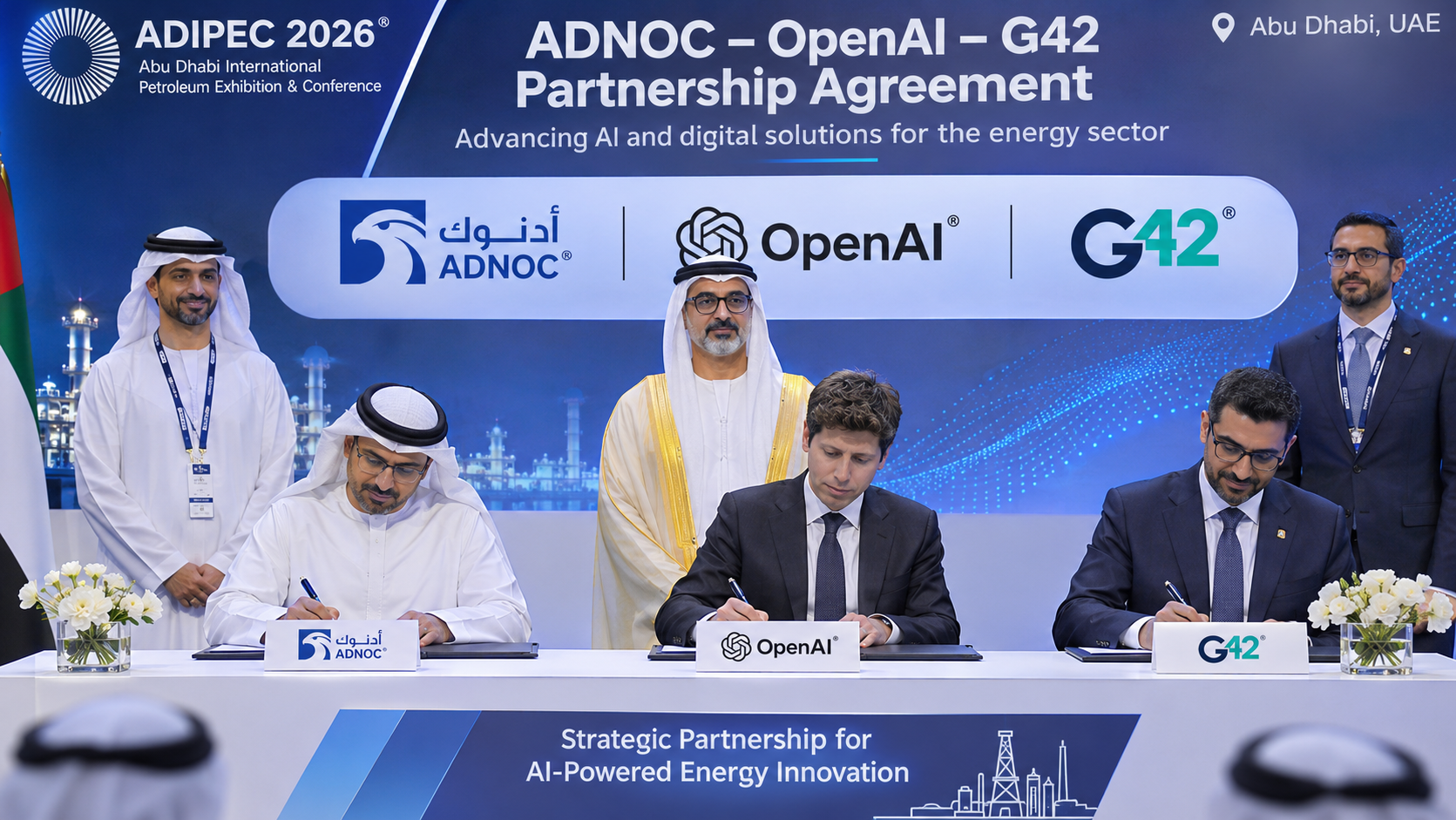
Al Jaber's address also covered ADNOC's new partnership with OpenAI and the Abu Dhabi technology group G42, announced earlier in the day. Under that agreement, ADNOC becomes the first energy company to deploy OpenAI Frontier, applying advanced AI to oilfield development, well management and commercial operations. The technology is intended to help value oil before it is extracted and to shorten complex development planning from months to hours.
He said the partnership would explore how AI can improve energy operations, at a moment when the industry is asking how much electricity and infrastructure artificial intelligence will itself consume.
A diplomatic note
Al Jaber credited the UAE's long-term investment in infrastructure, technology and international partnerships with helping the country withstand regional disruption. He added that the UAE would continue to pursue diplomatic solutions to restore stability to energy markets and global trade.
What happens next
ADIPEC runs until Thursday, 5 November, with more than 40 ministers and over 1,800 speakers on the programme. Energy security is the thread running through much of it, from reserves and LNG to AI and workforce training.
The real test of Al Jaber's agenda is what follows the conference. Strategic reserves, new storage, refining capacity and shipping infrastructure take years and large sums to build, and they depend on governments, lenders and insurers moving in the same direction. For energy markets that have just spent months drawing down their cushions, the speech was both a warning and an invitation to start rebuilding them.
Leave a comment
Your email address will not be published. Required fields are marked *