British Tourist Arrested in Dubai for Filming Missiles: A Warning on UAE Cyber Laws
A 60-year-old British tourist has been arrested in Dubai for allegedly filming missile activity amidst the ongoing conflict in the Middle East, a case that underscores the United Arab Emirates' strict cybercrime and information-sharing regulations. The man, reportedly from London, now faces the possibility of up to two years in prison if convicted, highlighting a stark warning for travelers unaware of the severe legal consequences for recording security incidents in the region.
The Incident: Filming in a Time of Conflict
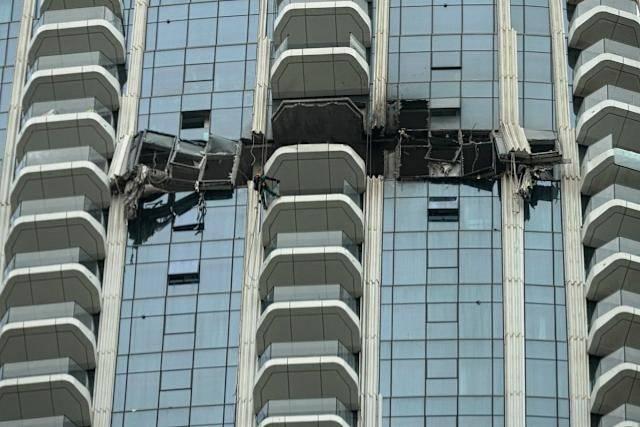
The tourist was detained earlier this week in the Bur Dubai area after authorities say he was observed recording missile interceptions. This incident occurs against a backdrop of heightened regional tensions, involving recent missile and drone attacks linked to the conflict between Iran and a US-led coalition. While the UAE's air defense systems have intercepted most of these projectiles, the government has implemented a strict information blackout to maintain public order and national security.
UAE Cybercrime Laws: No Tolerance for Recording
The UAE operates under comprehensive cybercrime legislation that criminalizes the recording and sharing of content deemed a threat to state security. Authorities have issued repeated public warnings for residents and visitors to refrain from filming military operations, explosions, or missile interceptions. Officials argue that sharing such material, even unintentionally, can spread misinformation, incite panic, and compromise sensitive security operations.
The British national is reportedly among more than 20 individuals who have faced charges for allegedly violating these laws in connection with the recent attacks. Legal experts point out that the legislation is intentionally broad, allowing prosecution for a range of activities including recording incidents with a mobile phone, sharing videos on messaging apps, or posting content on social media platforms.
The Legal Consequences: Prison and Deportation
The specific charges against the tourist remain unclear, particularly whether he shared the footage online. Some reports suggest he may have deleted the video shortly after recording it. However, under UAE law, the act of recording sensitive material itself can constitute an offense. Attempting to distribute such content, even if unsuccessful, can lead to aggravated charges.
If found guilty, the man could face a prison sentence of up to two years, accompanied by a substantial fine. Furthermore, foreign nationals convicted under these laws typically face deportation upon completion of their sentence, adding a life-altering consequence to the legal ordeal. The UK's Foreign, Commonwealth & Development Office (FCDO) is known to be providing consular assistance.
Expert Concerns: "Detained in Dubai" and Traveler Awareness
The case has drawn sharp criticism from advocacy groups like "Detained in Dubai," which assists foreigners navigating the UAE's legal system. They argue that many tourists are completely unaware of the vast differences between Western norms of free expression and the Gulf state's strict information controls. Behaviour that is commonplace elsewhere—such as filming a dramatic skyline event or sharing a news-worthy video on social media—can lead to immediate arrest and prosecution in the UAE.
This incident serves as a critical reminder for the millions of international visitors, including a large number of British tourists, who flock to Dubai each year. While the city promotes itself as a glamorous and open global hub, its legal system operates under a different set of principles, particularly when national security is perceived to be at risk.
Navigating the Heightened Security Environment
The arrest reflects the broader security posture across the Gulf region amid the ongoing geopolitical instability. Governments have heightened surveillance and are strictly enforcing regulations around information dissemination to prevent public disorder and protect military operations. For travelers, this means exercising extreme caution.
Authorities consistently advise the public to rely exclusively on official government channels for information and to avoid capturing or distributing any content related to security incidents, military assets, or the aftermath of attacks. This includes seemingly harmless actions like taking a photo of a police response or a plume of smoke on the horizon.
Also Read: Dubai Eid Al Fitr 2026 Holiday: 4-Day Break Announced for Public Sector From March 19-22
Conclusion: A Sobering Reminder for Tourists
For now, the British tourist remains in custody in Bur Dubai as investigators determine the full extent of the alleged violation. His fate will hinge on whether authorities deem his actions—filming the missiles and the potential intent to share the footage—a breach of the UAE's cybercrime laws.
The case is a potent reminder that travel comes with the responsibility of understanding and respecting local laws. In a region experiencing heightened conflict, the margin for error is non-existent, and the consequences for ignorance can be severe. Tourists in the UAE are urged to err on the side of caution, keep their phones in their pockets during incidents, and absorb the view without the lens.