
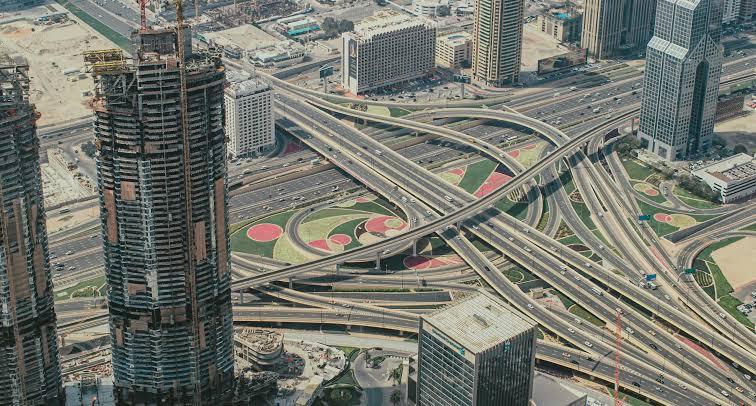
Dubai Approves Dh3.5 Billion Fourth Corridor: New 12-Lane Motorway to Link Sharjah and Abu Dhabi
Dubai's Crown Prince has approved an 80km, 12-lane motorway connecting Dubai, Sharjah and Abu Dhabi. The Dh3.5 billion first phase is expected to cut travel times by up to 60 percent once complete.
A New Artery for the UAE's Busiest Corridor
Dubai's road network is about to get a lot bigger and a lot smarter. Sheikh Hamdan bin Mohammed bin Rashid Al Maktoum, Crown Prince of Dubai and Chairman of The Executive Council of Dubai, has given the green light to the New Fourth Corridor, an ambitious 80-kilometre motorway designed to link Dubai directly with Sharjah and Abu Dhabi. Once finished, it promises to reshape how hundreds of thousands of daily commuters and freight operators move across the country's most congested stretch of highway.
The announcement, confirmed this week by the Roads and Transport Authority (RTA), places the project among the largest transport investments the emirate has undertaken in recent years. And unlike many headline infrastructure projects that stay on the drawing board for years, this one already has a price tag, a timeline and a construction plan attached to it.
What the Project Actually Involves
The corridor will stretch from Al Faya Road in Abu Dhabi all the way to Al Shanouf Road in Sharjah, running largely parallel to and easing pressure on some of the busiest existing routes, including Sheikh Zayed Road, Al Ittihad Road, Sheikh Mohamed bin Zayed Road and Emirates Road.
Officials have split the build into two phases. The first phase, roughly 30 kilometres long and costed at approximately Dh3.5 billion (about $953 million), will run from Al Shanouf Road in Sharjah to Dubai-Al Ain Road. According to Mattar Al Tayer, Director General of Dubai's RTA, this section alone is expected to slash journey times from around 35 minutes down to just 14 a reduction of roughly 60 percent.
The second phase will extend a further 50 kilometres, from Dubai-Al Ain Road through to Al Faya Road in Abu Dhabi, and is projected to cut travel time on that stretch from 50 minutes to about 24 minutes.
Engineering-wise, the scale is hard to overstate. The completed corridor will feature 12 lanes running in both directions, capable of handling up to 24,000 vehicles per hour in each direction. To achieve that, builders will need to construct 72 bridges, 17 tunnels and 45 stormwater drainage culverts across the route. The first phase alone accounts for around 55 lane-kilometres of at-grade roads, 21 kilometres of bridges and ramps, and 2.5 kilometres of tunnels.
Connecting Communities, Airports and Rail
Beyond simply moving cars faster, the motorway has been designed with the UAE's wider transport ecosystem in mind. The route will connect directly with Al Maktoum International Airport which is being expanded to eventually become Dubai's primary airport with capacity for up to 260 million passengers a year as well as with the Etihad Rail network, the national freight and passenger rail line steadily coming online across the Emirates.
The corridor will also pass close to the Al Marmoom and Al Wohoosh Desert Conservation Reserves, and serve fast-growing residential and development areas including Madinat Latifa, Madinat Hind, Al Yalayis, Al Awir and Dubailand. Planners say improved access to these communities is a deliberate part of the project's rationale, as Dubai's population continues pushing outward from the traditional city centre.
Perhaps just as important for daily life in the emirate is the project's freight-diversion goal. A significant share of heavy truck traffic currently passes through populated urban corridors on its way between emirates. Routing that traffic onto a dedicated, high-capacity motorway is expected to reduce congestion, improve road safety and cut down on wear to city-centre roads.
Why It Matters for the Region's Economy
Announcing the approval, Sheikh Hamdan framed the motorway as more than a traffic-easing measure describing it as central to the UAE's long-term economic and quality-of-life ambitions. He noted that continued investment in infrastructure remains a key pillar of economic growth and of preparing Dubai for the future, a message that echoes the broader UAE government strategy of pairing physical infrastructure with digital transformation.
Dubai's total road network has already reached nearly 26,000 lane-kilometres, according to figures released by the Dubai Media Office, and authorities have signalled that further expansion is planned as the population and economy continue to grow. With more than 3.1 million residents expected to benefit directly from the completed corridor, the project is being positioned as one of the emirate's most consequential transport investments of the decade a bet that better connectivity between Dubai, Sharjah and Abu Dhabi will pay long-term economic dividends across the wider UAE.
No firm completion date has yet been announced for either phase, though construction activity is expected to ramp up in the coming months as contracts are finalised.

Leave a comment
Your email address will not be published. Required fields are marked *