
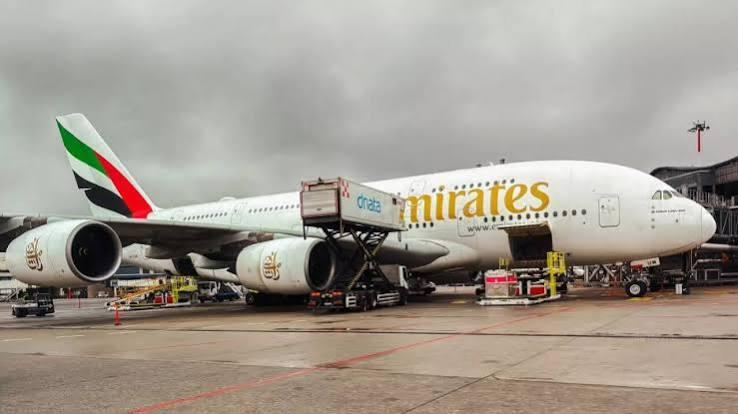
Emirates and Etihad Resume Normal US Services After Major FAA Outage Disrupted Northeast Airports
Emirates and Etihad flights to and from the United States resumed on Tuesday after a major US air traffic control communications outage caused widespread delays and cancellations at Northeast airports the previous day. Both UAE carriers kept key routes to New York and Boston running through the disruption, though residual delays are expected as US airports work to restore full capacity.
Emirates and Etihad Airways resumed a full schedule of flights to the United States on Tuesday, a day after a major communications failure at the US Federal Aviation Administration triggered widespread delays and cancellations across Northeast American airports. While the disruption forced both UAE carriers to adjust some services on Monday, flight tracking data showed both airlines maintaining their core transatlantic connections through the turbulence, with UAE-to-US flights continuing to New York and Boston even as US domestic aviation struggled to cope.
The outage originated within the FAA's communications systems on September 21, causing thousands of flight delays and cancellations across the United States as air traffic controllers lost critical connectivity. The disruption rippled outward from the Northeast, affecting airports well beyond the immediate region as the knock-on effects of the failure spread through the tightly interconnected US aviation network. The FAA itself issued a traffic advisory flagging delays at numerous airports, including Atlanta, Charlotte, both major Dallas-area airports, Houston's two airports and locations across Florida, while separately noting low cloud conditions affecting Philadelphia, Seattle, San Francisco and the New York and Washington DC areas, along with wind-related concerns in Las Vegas.
For Emirates and Etihad, the priority throughout the disruption was maintaining their long-haul connections into the affected US airspace wherever possible. Emirates flight EK203, its Dubai to New York JFK service operated with an Airbus A380, departed Dubai in the early hours of September 22, tracking data showed, running slightly behind its scheduled departure time but still getting airborne. The airline also retained EK201 on its Dubai-to-JFK schedule, while EK209, the carrier's Dubai-to-Newark route via Athens, remained listed as operating as planned.
Etihad Airways showed a similar pattern of resilience. Its EY1 service from Abu Dhabi to New York JFK departed in the early morning hours of September 22, with flight data placing its estimated arrival into JFK later that morning. The airline also kept EY7, its Abu Dhabi-to-Boston route, on its published schedule, with a morning departure from Abu Dhabi and an afternoon arrival into Boston. Flight trackers monitoring both airlines' services found no confirmed Emirates or Etihad cancellations among these closely watched routes as of early Tuesday, a notable outcome given the scale of disruption playing out across the broader US aviation system.
Aviation analysts note that while Emirates and Etihad's own operations stayed largely separate from the specific FAA measures triggered by the outage, the ripple effects of any large-scale US air traffic control disruption inevitably touch international carriers flying into affected airspace. Delays connecting to onward domestic US flights, congestion at major hub airports, and general uncertainty around gate and runway availability can all indirectly affect long-haul arrivals even when the inbound international flight itself departs and lands close to schedule.
For passengers travelling between the UAE and the United States in the coming days, the practical guidance from both airlines is to expect a gradual return to normal operations rather than an instant resolution. US airports were still in the process of clearing the backlog of delayed and cancelled flights from September 21 as of Tuesday morning, meaning some residual delays remain likely as the system works through the accumulated disruption. Both Emirates and Etihad have continued advising customers to check flight status directly through official airline channels ahead of travel, given how quickly conditions were shifting through the height of the outage.
The incident adds to a string of recent challenges facing US air traffic infrastructure, with communications and staffing issues periodically surfacing as points of vulnerability within the system. For UAE-based airlines and their customers, episodes like this reinforce the importance of monitoring real-time flight status rather than relying solely on published schedules, particularly during periods when US domestic aviation infrastructure is under strain.
As of Tuesday, both Emirates and Etihad indicated that their transatlantic and trans-Pacific-adjacent operations into the US were returning to normal, though the airlines, along with US authorities, continued to monitor the situation closely as American airports worked toward restoring full operational capacity following one of the more significant air traffic control disruptions to hit the country's Northeast corridor in recent memory.

Leave a comment
Your email address will not be published. Required fields are marked *