
Etihad Cancels Saudi Flights Until November 5 as flydubai Extends Suspensions to October 29
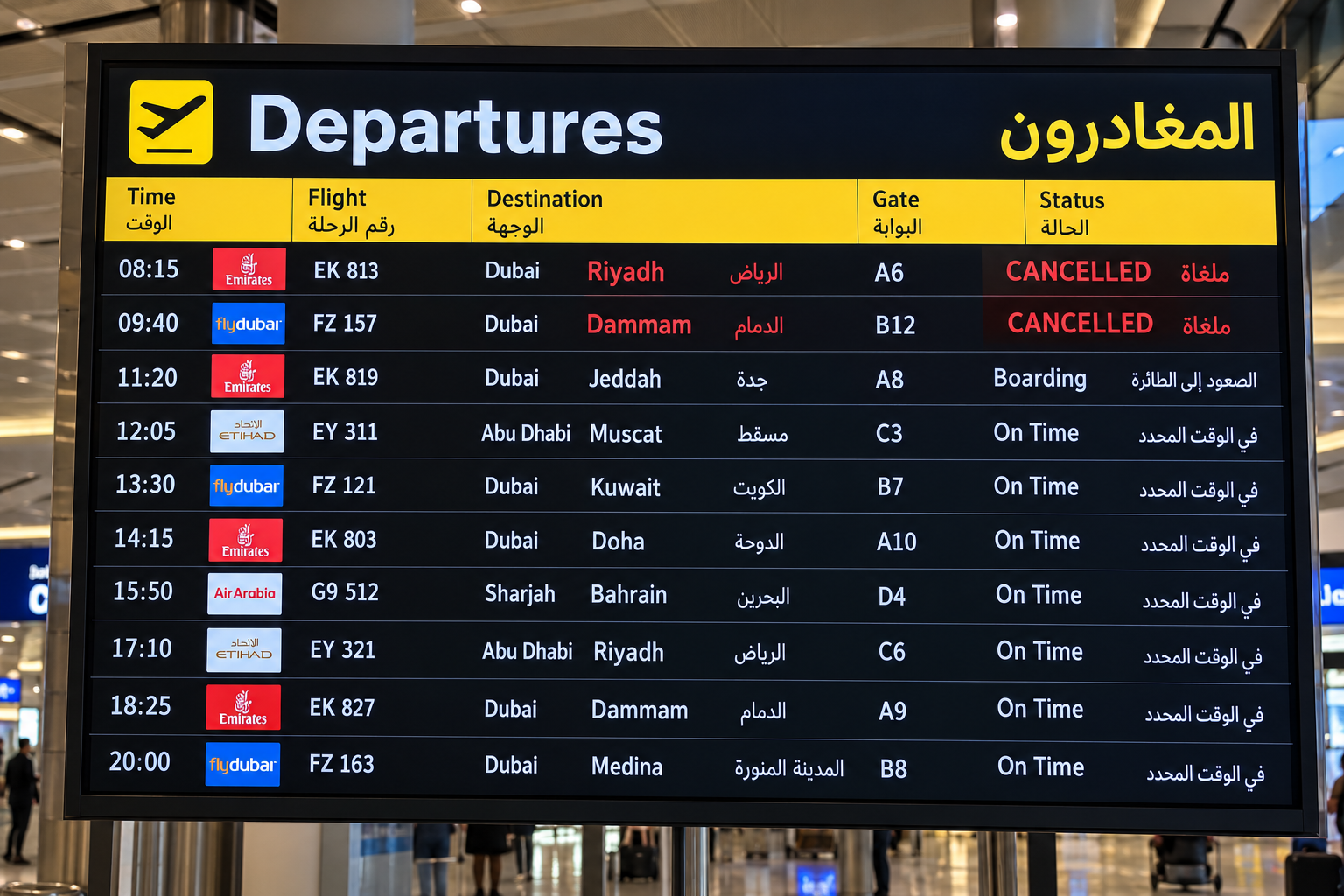
Etihad Airways has cancelled its Abu Dhabi flights to Riyadh, Dammam and Jeddah until November 5, while flydubai has suspended Riyadh, Dammam and Abha services until October 29. Airlines cite regional disruption linked to attacks on Saudi airports. Passengers are urged to check flight status before travelling.
ABU DHABI / DUBAI – Anyone hoping to fly from the UAE to Saudi Arabia in the coming days will need to be patient. Etihad Airways has pushed the return of its Saudi services back to November 5, and flydubai has cancelled its Riyadh, Dammam and Abha flights until at least October 29, as attacks on Saudi airports continue to unsettle regional air travel.
Only a few days ago, both airlines were working towards a restart date of October 24, which is today. Instead, the deadline has moved again.
Etihad: no Saudi flights until early November
Etihad confirmed on Friday that its flights between Abu Dhabi and Riyadh, Dammam and Jeddah are cancelled through Thursday, November 5, citing regional disruption. Every Riyadh and Dammam service is affected, along with four Jeddah rotations: EY601, EY602, EY603 and EY604. The carrier has warned that further schedule changes remain possible.
The new date adds almost two weeks to the previous cut-off. When Etihad announced its earlier extension on October 19, it was planning to resume the affected routes after October 24.
flydubai: a string of short extensions
flydubai has taken a step-by-step approach. A spokesperson said flights to several Saudi destinations, including Riyadh, Dammam and Abha, are cancelled up to and including October 29, and that passengers should expect further changes to the Saudi schedule.
The five-day extension is the latest in a long run. On October 9, the Dubai-based carrier said Riyadh and Yanbu flights were off until October 10 and Abha until October 11. Riyadh was then suspended until October 14, with Abha and Dammam added soon afterwards. Later updates moved the deadline to October 19, then October 24, and now October 29.
Short, repeated extensions of this kind give an airline room to restart quickly if conditions improve. For travellers, though, they make planning almost impossible.
What is behind the disruption
Both airlines point to the wider regional situation. Khaleej Times has linked the latest cancellations to a series of Houthi attacks on Saudi airports. Gulf News reported earlier this month that on October 8 attacks struck airport facilities and a Saudia aircraft, and that a Saudia captain was among those killed.
Riyadh's King Khalid International Airport has partially reopened after a closure earlier this month, The National reported, but international services into the Saudi capital remain heavily disrupted.
Other airlines are in the same position
The pattern reaches well beyond the UAE's two home carriers. According to reports from Gulf News and The National:
- IndiGo has extended its Riyadh cancellations until October 31, while Jeddah, Dammam and Madinah services are off until October 27.
- Qatar Airways has cancelled Riyadh and Dammam flights through October 24 and has cut Jeddah service from seven daily flights to four.
- Gulf Air, Kuwait Airways and Lufthansa have cancelled Riyadh flights until the airport reopens.
- Emirates and Air Arabia have also reported cancellations affecting Saudi routes.
A little good news for Dubai's network
Not every update is negative. Gulf News reported on Saturday that more Europe and Asia routes are returning to Dubai, even as the Dubai Civil Aviation Authority reminded travellers to read their ticket terms before flying.
Why it matters to UAE residents
The Saudi routes carry far more than holidaymakers. Residents of the Emirates regularly travel to the Kingdom for Umrah, business and family visits, which makes open-ended cancellations more than an inconvenience. A missed business meeting or a postponed pilgrimage can carry real costs, particularly for families who booked months in advance.
The disruption also shows how closely linked the Gulf's aviation hubs are. A closure or restriction at one major airport quickly ripples through schedules in Dubai, Abu Dhabi and beyond, as aircraft and crews are shuffled to cover the gaps.
What passengers should do
Airlines have been consistent on one message: schedules can change at short notice. Travellers with bookings to or through Saudi Arabia should:
- Check flight status on the airline's website or app before leaving for the airport.
- Confirm that contact details are up to date in the booking, so alerts arrive in real time. flydubai has specifically urged passengers to do this.
- Read the ticket terms and ask the airline about rebooking or refund options if the journey falls inside a cancellation window.
- Allow extra time for any alternative arrangements, especially for Umrah or time-sensitive business travel.
With Riyadh's main airport only partly reopened and the cancellation windows growing longer, a firm date for a full return to normal operations remains elusive. For now, the safest assumption for anyone booked on a Saudi route is that the schedule is still moving.

Leave a comment
Your email address will not be published. Required fields are marked *