
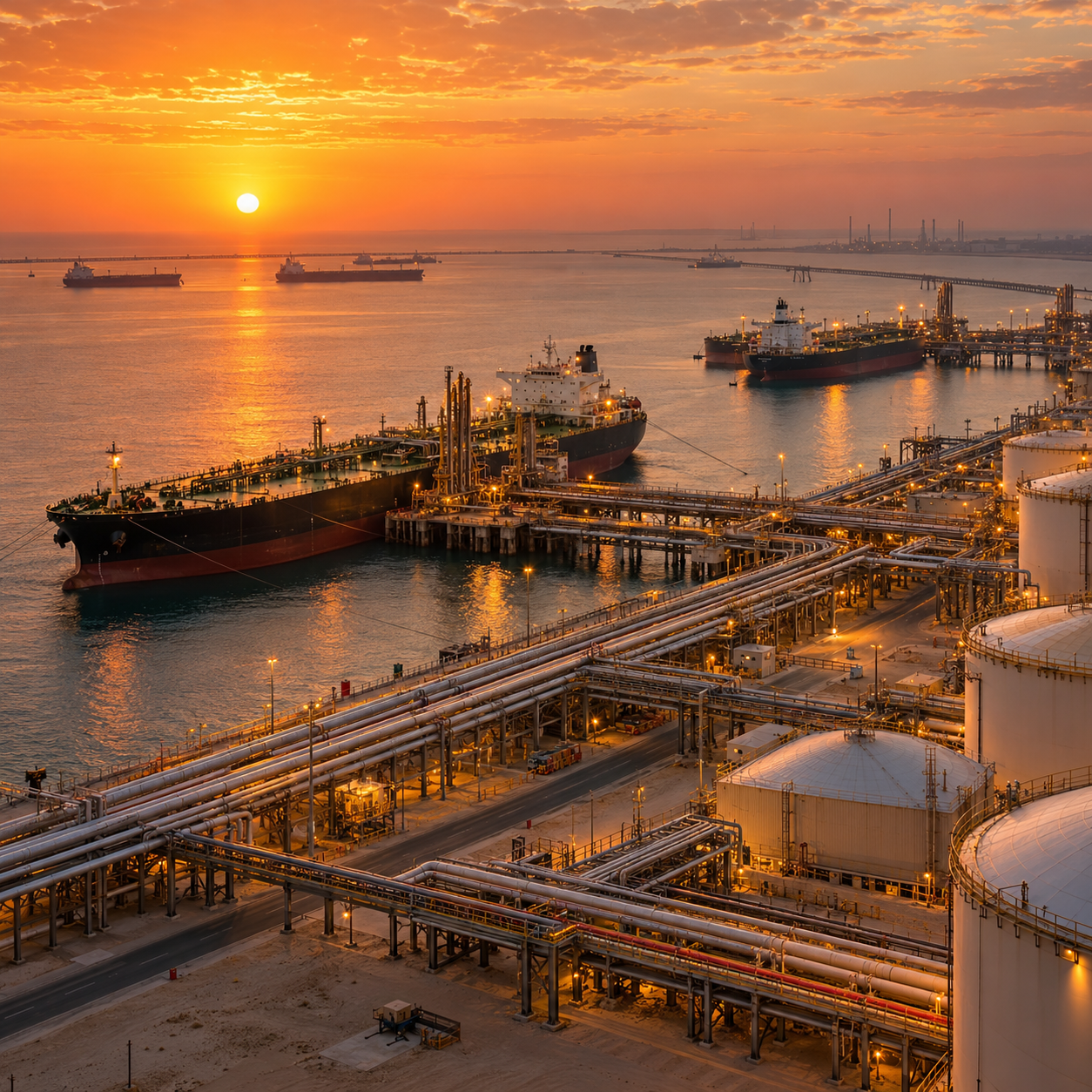
Gulf Oil Exports Rebound as Brent Slips Below $100, but UAE Motorists and Markets Still Feel the Strain
Brent crude fell under $100 a barrel on Tuesday as data showed Middle East exports recovering toward pre-war levels, helped by pipelines that bypass the Strait of Hormuz. Producers and analysts caution that stockpiles are thin and new attacks in Yemen and Saudi Arabia could reverse the improvement. In the UAE, petrol prices remain well above September levels.
A rare piece of good news reached energy markets on Tuesday: Brent crude, the global benchmark, slipped back under $100 a barrel as fresh data suggested that oil is flowing out of the Gulf in volumes close to those seen before the Iran war began.
Exports climb back
Oil futures were down about 2.5 per cent in midday trading, leaving Brent just beneath the symbolic $100 mark. That is still roughly 30 per cent higher than before the US and Israel launched their offensive against Iran at the end of February, but the direction of travel was welcome after months of disruption.
Tracking firm Kpler reported that Middle East oil exports, excluding Iran, rose above their pre-war average of about 18 million barrels a day for several days last week. Crude shipments had already returned to pre-war levels in September, it said. Another analyst put the September average for Gulf exports outside Iran at 19.2 million barrels a day, or 81 per cent of pre-war levels, with crude at about 91 per cent and refined products lagging at roughly 60 per cent. The two sets of figures use different measures, but both point to a substantial recovery.
Shell chief executive Wael Sawan struck a similar note at the Energy Intelligence Forum in London, saying flows from the Middle East were back above 80 per cent of their pre-war level.
The role of pipelines
The rebound has not come through the Strait of Hormuz alone. Kpler said about 40 per cent of exports now bypass the waterway, and that most of the oil moving by those alternative routes travels through Saudi and UAE pipelines. Much of the crude that does cross the strait is transferred between tankers offshore. Routes via the Red Sea have also become more important.
For the UAE, that makes its overland export infrastructure strategically valuable at a time when shipping through Hormuz remains contested. Maritime monitors reported this week that several tankers were struck in the strait over the weekend and that another was ordered to turn back by Iran's Revolutionary Guard. The US, for its part, says it has destroyed 13 commercial vessels it accuses of breaching its blockade of Iranian ports.
A fragile recovery
Producers are warning against reading too much into the numbers. Saudi Aramco chief executive Amin Nasser told the same London forum that global stockpiles are "scarily thin" and that the system is already under strain. Khaleej Times reported he also cautioned that rebuilding crude and fuel inventories could take as long as two years.
The security picture in the wider region adds to the uncertainty. Fighting between Saudi-backed forces and the Iran-backed Houthis in Yemen has intensified around the Bab el-Mandeb Strait, a key gateway to the Red Sea. The Houthis claimed on Tuesday to have struck Saudi airports and an oil refinery, though Saudi aviation authorities confirmed attacks on two airports and reported three minor injuries. Reports about the flow of oil through Saudi Arabia's East-West pipeline after a new strike have been conflicting, with some sources saying it stopped and others saying it continued normally.
What it means at home
For residents of the UAE, the global price relief has yet to reach the pump. Special 95 petrol rose to Dh4.28 a litre from 1 October, up from Dh3.69 in September, an increase of more than 16 per cent that has prompted some residents to look again at Metro commutes and remote working days.
Elsewhere in the economy, the picture is mixed but resilient. Local business reporting this week pointed to Abu Dhabi's sovereign funds accounting for almost half of the region's sovereign dealmaking in the first nine months of the year, and to UAE stocks outperforming a weaker Gulf. A bank executive also told the press that the regional conflict has changed how his institution plans its capital, if not its growth ambitions.
The global ripple
The effects of the conflict are visible well outside the region. In Britain, the average price of diesel hit a record just under £2 a litre in the week to 5 October, surpassing the previous high set in 2022. Central banks, meanwhile, face pressure to keep interest rates high to contain energy-driven inflation, according to market commentary on Tuesday.
What to watch
Analysts say the price dip could prove short-lived. Much depends on whether Gulf exports hold steady, whether the Red Sea and Hormuz remain passable, and whether Washington and Tehran can break their diplomatic stalemate. For now, the numbers suggest the region's supply system has shown resilience, but industry leaders are stressing that there is little spare capacity left if it is tested again.

Leave a comment
Your email address will not be published. Required fields are marked *