IIT Madras to Establish Applied AI Innovation Centre in Dubai, Strengthening India-UAE Tech Links
Chennai/Dubai — The Indian Institute of Technology Madras (IIT Madras) is set to expand its global footprint in artificial intelligence (AI) by launching its first Applied AI Innovation Centre in Dubai, marking a significant step in international collaboration on emerging technologies. The centre is being established by the institute's Global Research Foundation and is expected to play a pivotal role in fostering innovation, supporting startups and strengthening technology ties between India and the United Arab Emirates (UAE).
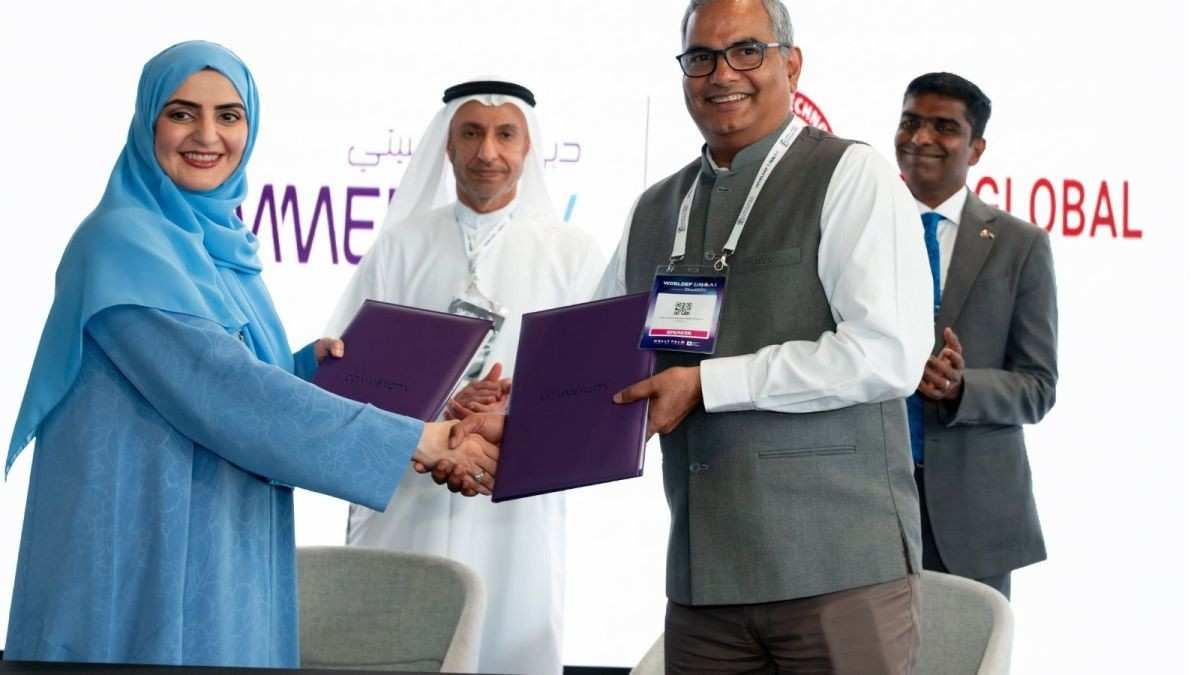
The centre will be situated in Dubai CommerCity, a technology-focused free zone dedicated to digital commerce and innovation across the Middle East, Africa and South Asia. The initiative was officially announced during WORLDEF Dubai 2026 — the region's largest global gathering focused on digital trade and commerce — where the memorandum of understanding (MoU) was signed. The signing took place on the sidelines of the event, which was inaugurated by Sheikh Mansoor bin Mohammed bin Rashid Al Maktoum, President of the UAE National Olympic Committee.
A Strategic Hub for AI Innovation
The Applied AI Innovation Centre will begin operations by hosting a cohort of six applied AI startups, all backed by IIT Madras Global Research Foundation. These startups have a combined valuation of around USD 118 million and are projected to generate approximately USD 281 million in revenue over the next five years. This initial cohort represents the vanguard of what organisers hope will become a thriving ecosystem of AI innovation connecting India and the UAE.
According to officials, the centre's main mission is to accelerate the translation of advanced AI research into practical, market-ready solutions. It will provide a platform where research breakthroughs can be scaled, commercialised and deployed across different sectors — including smart cities, energy, logistics and construction — while also nurturing intellectual property development that can protect and enhance the value of innovations.
Universities and research institutions often struggle to turn academic research into real-world industry applications. The gap between laboratory breakthroughs and commercial products can be wide, with many promising technologies never reaching the market. By establishing this centre in Dubai, IIT Madras aims to bridge that divide, creating a "high-velocity ecosystem" that supports deep-tech startups and drives sustainable innovation on a global scale.
Bridging Academia and Industry
Prof. Raghunathan Rengaswamy, Dean of Global Engagement at IIT Madras, described the project as a "pivotal step" in globalising the institute's research endeavours. He emphasised that the centre will serve as a conduit for delivering human-centric AI solutions while promoting safety, governance and responsible development. Such an approach aligns with growing global concerns about ethical AI deployment and its societal impact.
"The initiative bridges academic breakthroughs with industrial scale to drive human-centric AI while establishing a strategic corridor for AI solutions anchored in safety and governance," Prof. Rengaswamy said.
The centre's activities will not only focus on fostering local product development and solution deployment but also on intellectual property creation. This could help startups protect innovations and attract investment — a critical factor in building technology ecosystems that endure and expand beyond initial funding rounds. By providing resources for patent filing, technology commercialisation, and market entry, the centre aims to create sustainable ventures rather than merely incubating ideas.
The Startup Cohort
The six AI startups selected for the initial cohort represent diverse applications of artificial intelligence across multiple sectors. While specific details of each startup have not been fully disclosed, they span areas including smart city solutions leveraging AI for urban planning and infrastructure management, energy optimisation technologies for industrial and commercial applications, logistics and supply chain innovations using predictive analytics, construction technology incorporating AI for project management and safety, healthcare applications focused on diagnostics and patient care, and financial technology solutions for the Gulf region's growing digital economy.
The combined valuation of USD 118 million and projected revenue of USD 281 million over five years suggests these are not early-stage ideas but maturing ventures ready for regional expansion. Dubai's strategic location offers access to markets across the Middle East, Africa, and South Asia—a combined population of billions and some of the world's fastest-growing economies.
Highlighting India-UAE Technological Partnership
The collaboration underlines the expanding technology partnership between India and the UAE. The project is seen as an important component of the broader India–UAE Comprehensive Economic Partnership Agreement (CEPA) and supports both countries' ambitions to accelerate digital trade and innovation. Dubai CommerCity, with its strategic location and infrastructure, is expected to serve as a launchpad for AI solutions that can reach markets across the Gulf Cooperation Council (GCC) region and beyond.
The India-UAE technology corridor has grown significantly in recent years, with both nations recognising the complementarity of Indian technical talent and UAE infrastructure and market access. This centre represents the latest and most focused effort to institutionalise that collaboration in the critical field of artificial intelligence.
Amna Lootah, Director-General of Dubai CommerCity and Dubai Airport Freezone, emphasised that the MoU strengthens Dubai's position as a hub for digital trade and advanced technologies. She highlighted that the centre's establishment aligns with Dubai's Economic Agenda D33, a blueprint to double the emirate's economy by focusing on innovation, technology and sustainable growth.
"Dubai has positioned itself as a global destination for technology and innovation, and this partnership with IIT Madras reinforces that standing," Lootah said. "We look forward to supporting these startups as they develop solutions that will shape industries across the region."
Supporting Startup Growth and Market Access
Thirumalai Madhavnarayan, CEO of IITM Global, noted that the agreement "operationalises the technology corridor" between India and the UAE. The centre aims to accelerate market access for startups and convert responsible AI research into tangible economic value, not just regionally but on a global scale.
By helping startups scale and navigate new markets, the centre is expected to attract entrepreneurship, create high-skill jobs and contribute to economic diversification in both India and the UAE. The initiative also underscores the critical role of international partnerships in driving innovation and competitiveness in the rapidly evolving AI landscape.
The Dubai location offers several advantages for Indian startups seeking international expansion. It provides access to capital through Dubai's sophisticated financial ecosystem, market proximity to the entire Gulf region with its high per-capita income, infrastructure support including world-class facilities and business services, a regulatory environment designed to support technology ventures, and connectivity to markets across Africa, Europe, and Asia.
A Milestone for IIT Madras Global Expansion
The establishment of the Applied AI Innovation Centre in Dubai represents a major milestone for IIT Madras Global Research Foundation, a strategic initiative launched at the beginning of 2026 to elevate the institute's global impact. Through ventures like this, IIT Madras is positioning itself not just as a leading academic institution in India, but as a global hub for cutting-edge research, innovation and technological collaboration.
IIT Madras has consistently ranked as one of India's premier engineering institutions, with a strong record of research output and successful startups. This Dubai centre represents the next logical step in its evolution—exporting not just graduates but entire innovation ecosystems capable of operating on the global stage.
Implications for the AI Landscape
The establishment of this centre comes at a critical moment in AI development worldwide. As nations and companies race to develop and deploy AI technologies, centres of excellence like this one can help ensure that innovation benefits a broad cross-section of society rather than being concentrated in a few global hubs.
By focusing on "applied AI" and "human-centric" development, the centre signals a commitment to technologies that solve real problems for real people, rather than pursuing AI advancement for its own sake. This approach, combined with emphasis on safety and governance, could serve as a model for other international technology partnerships.
Also Read: Rajpal Yadav Granted Interim Bail in ₹9 Crore Cheque Bounce Case, Calls for Smoking Zones in Indian Jails
Looking Ahead
As the centre begins operations in the coming months, all eyes will be on the performance of its initial startup cohort. Success could pave the way for expansion, additional cohorts, and deeper integration between the Indian and UAE innovation ecosystems.
For IIT Madras, the centre represents a new chapter in its history of academic excellence—one where its influence extends beyond the classroom and laboratory into international markets and industries. For Dubai, it adds another element to its growing reputation as a destination for technology and innovation. And for the India-UAE partnership, it offers a concrete example of what collaboration can achieve when two nations align their technological ambitions.
IIT Madras goes global. Dubai gains an AI hub. The India-UAE technology corridor strengthens.