
Iran Says Hormuz Will Stay "Closed" Until the US Meets Seven Conditions — What It Means for the UAE
Iran's parliament speaker says the Strait of Hormuz will remain closed until Washington meets seven conditions tied to a collapsed June agreement. Shipping data suggests traffic is still moving, but at reduced levels and under heavy risk, with consequences for UAE trade, fuel and travel.
Iran's parliament speaker has drawn a hard line over the Strait of Hormuz, telling lawmakers in Tehran that the waterway will stay "closed" until the United States meets a set of seven conditions. For the UAE, which depends on the narrow passage for a large share of its oil and gas exports, the statement is far more than political theatre.
The remarks by Mohammad Bagher Ghalibaf, reported on Monday, come as the standoff between Washington and Tehran enters another tense week. He said the conditions are rooted in the 14-point memorandum of understanding agreed in June, and he dismissed what he called unilateral American demands, saying the "era of wasting time" was over.
A deal that did not last
The June memorandum was meant to end hostilities and open a pathway to wider talks, particularly over Iran's nuclear programme. It set out a roadmap for a final agreement within 60 days and a high-level committee to oversee mediation, with working groups on nuclear issues, sanctions and a mechanism for resolving disputes.
That framework fell apart in July. Since then the United States has struck Iranian military and civilian targets, while Iran has retaliated against American bases across the Gulf. Mr Ghalibaf claimed Washington had recently floated new proposals through a mediator, a claim he used to argue that the United States was under pressure. There has been no independent confirmation of that assertion.
Closed on paper, open in practice?
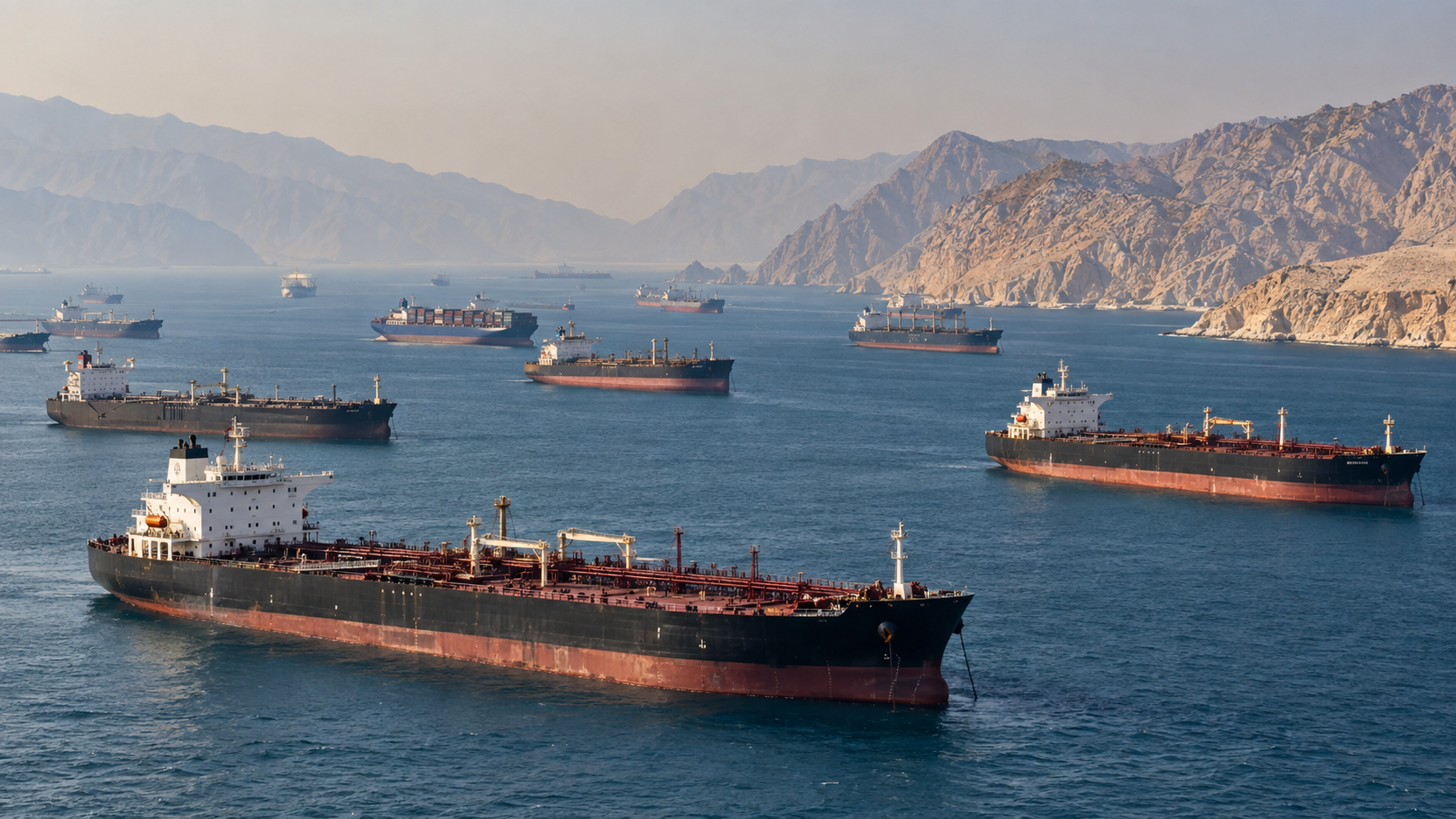
The word "closed" tells only part of the story. According to estimates cited by CNN, crude flows through the strait are running at roughly 80 per cent of pre-war levels, which suggests the chokepoint is still functioning, though under heightened risk. Satellite data reviewed by European monitors has also shown Gulf oil exports recovering to near pre-war volumes, helped in part by ship-to-ship transfers off the coast of Oman.
That recovery is fragile. Recent strikes on tankers in and around the strait have pushed insurers to price in higher war-risk premiums, and those costs tend to travel down the supply chain, first into freight rates and eventually into the price of imported goods.
For a country that imports most of what it consumes, that matters. Most goods are still arriving in UAE ports, but businesses that rely on just-in-time deliveries, or on regional feeder services, are being urged to keep a close eye on advisories from ports, freight forwarders and insurers.
A second front in Yemen
The risk is no longer confined to the Gulf itself. Saudi-backed Yemeni forces have launched a major offensive against Iran-aligned Houthi fighters, opening a potentially dangerous front near the Bab Al Mandab strait. That route sits at the southern end of the Red Sea and is a key artery for traffic heading to and from the Suez Canal. Any fresh attacks on shipping there would add pressure to a trade network already under strain.
Why UAE residents should care
The effects are already visible in daily life. Brent crude is trading above $100 a barrel, and the UAE's Fuel Price Committee has raised pump prices for a third consecutive month. Petrol and diesel are now well above Dh4 a litre.
Aviation has also felt the strain. Dubai International, Al Maktoum and Zayed International airports are all open and operating at close to normal levels, but delays and cancellations on some regional routes continue, and schedules can change at short notice. Travellers heading toward or across the northern Gulf have been advised to reconfirm bookings and allow extra time.
What to watch next
Three signals will shape the days ahead. The first is whether Washington responds to the seven conditions, or whether diplomacy stays frozen. The second is the pace of tanker traffic through the strait and whether further attacks occur. The third is how the Yemen offensive develops near Bab Al Mandab.
Energy markets will be watching all three. The G7 recently agreed to release 100 million barrels of oil and fuel from emergency stocks, a move that took roughly $5 off crude prices, but that cushion could disappear quickly if shipping is disrupted again.
For now, residents are not facing shortages. What they are facing is uncertainty, and the costs that come with it: higher fuel bills, a more cautious travel environment and a shipping industry that is paying a premium to keep goods moving.

Leave a comment
Your email address will not be published. Required fields are marked *