
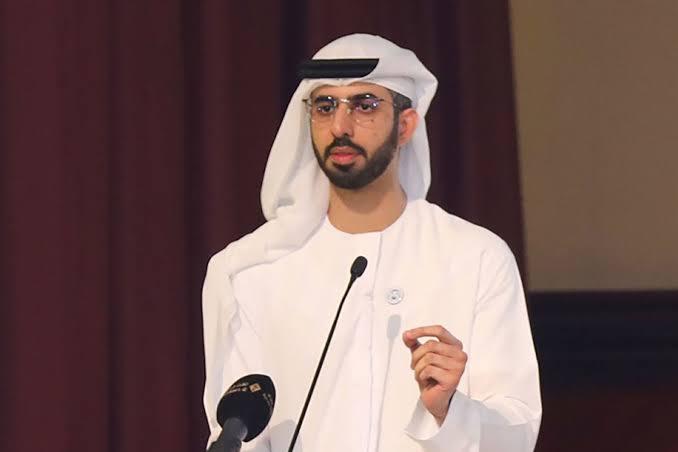
UAE AI Minister Says Too Much Focus on Regulation Can Obscure AI's Practical Benefits
Omar Sultan Al Olama, the UAE's Minister of State for Artificial Intelligence, says the country is giving businesses early access to frontier technologies while letting them keep control of sensitive data. He also said AI should support human interaction rather than replace it, and that further technology announcements are coming.
The UAE wants to be the place where organisations get first access to the most advanced technology, and where they don't have to hand over their data to do it. That was the message from the country's AI minister at a Dubai event on Monday, as the UAE pushes to accelerate UAE AI adoption across its economy.
Access without surrendering data
Omar Sultan Al Olama, Minister of State for Artificial Intelligence, Digital Economy and Remote Work Applications, spoke at a ForsaTEK discussion on technology and innovation in Dubai. He said the UAE's approach does not rest on a single technology company or one major partnership. It aims to build an ecosystem where organisations can reach emerging technologies and adopt them safely.
The goal, he said, is to give the UAE an advantage in attracting people and organisations that can choose to work anywhere in the world. That advantage includes quality of life, but also early access to emerging technologies without having to give up control of sensitive data.
Beyond the regulation debate
The minister's most notable remark concerned regulation. He said the conversation about AI should move beyond rules and focus more on showing what the technology can do for people, and that an excessive focus on regulation can sometimes overshadow its practical benefits. The comments come as governments and businesses worldwide weigh how to regulate AI without slowing innovation through regulatory uncertainty.
He also argued that public fear of AI is often at odds with everyday habits. People who are wary of the technology may already rely on algorithm-driven tools daily without recognising how deeply AI is embedded in their lives. The challenge, he said, is educating people so they become "wielders of the technology" rather than being displaced or overwhelmed by it.
Technology should support people, not replace them
Mr Al Olama stressed that greater use of AI does not mean removing people from services. AI can handle routine tasks efficiently, but customers and travellers still value human interaction in some situations. He pointed to education, where early expectations that large language models would transform teaching had instead highlighted the importance of social and emotional intelligence. The same logic applies to airports, he said: technology should identify where human contact adds value and keep people in those roles.
Aviation featured prominently in the discussion. He said technology will be essential for scaling the passenger experience given the UAE's geography and airport capacity, helping airlines, airports, customs and border authorities serve more travellers without infrastructure and staffing having to expand at the same pace. He advised established organisations such as Emirates to keep innovating and take calculated risks, since they have reputations they cannot put at unnecessary risk. He also said organisations should judge technology by how it improves the experience of the people they serve, not only by metrics such as revenue per employee.
More announcements expected
Mr Al Olama said several technology-related announcements are expected in the coming months as the UAE works to strengthen its position as a destination for people and organisations seeking advanced technologies. He did not name specific projects or partners in the remarks reported.
Context: a long-running national strategy
The UAE has spent nearly a decade building this position. In 2017 it appointed a Minister of State for Artificial Intelligence and launched its first AI strategy, and it has since expanded its efforts through the National Strategy for Artificial Intelligence 2031, which targets sectors including health care, education and transportation. A non-binding UAE charter issued in June 2024 sets out 12 principles, covering areas such as privacy, transparency, human oversight and accountability.
Mr Al Olama's message on Monday is worth reading alongside his earlier remarks on governance. In July, at the opening of the UN's Global Dialogue on AI Governance in Geneva, he urged a "cautiously optimistic" approach and called for stronger international institutions and independent judicial mechanisms to oversee AI across borders. Taken together, the position is that governance matters, but should not crowd out the case for the technology's benefits. Critics of lighter-touch approaches argue that guardrails need to be settled early, a view the debate has yet to resolve.
For businesses in the UAE, the practical takeaway is that the government is signalling openness to early adoption, with data control as a stated condition. The coming announcements he referred to will show how that promise translates into concrete offerings.


Leave a comment
Your email address will not be published. Required fields are marked *