
UAE Flights Monday: Delays at DXB and Zayed as Airlines Adjust Schedules Amid Regional Tensions
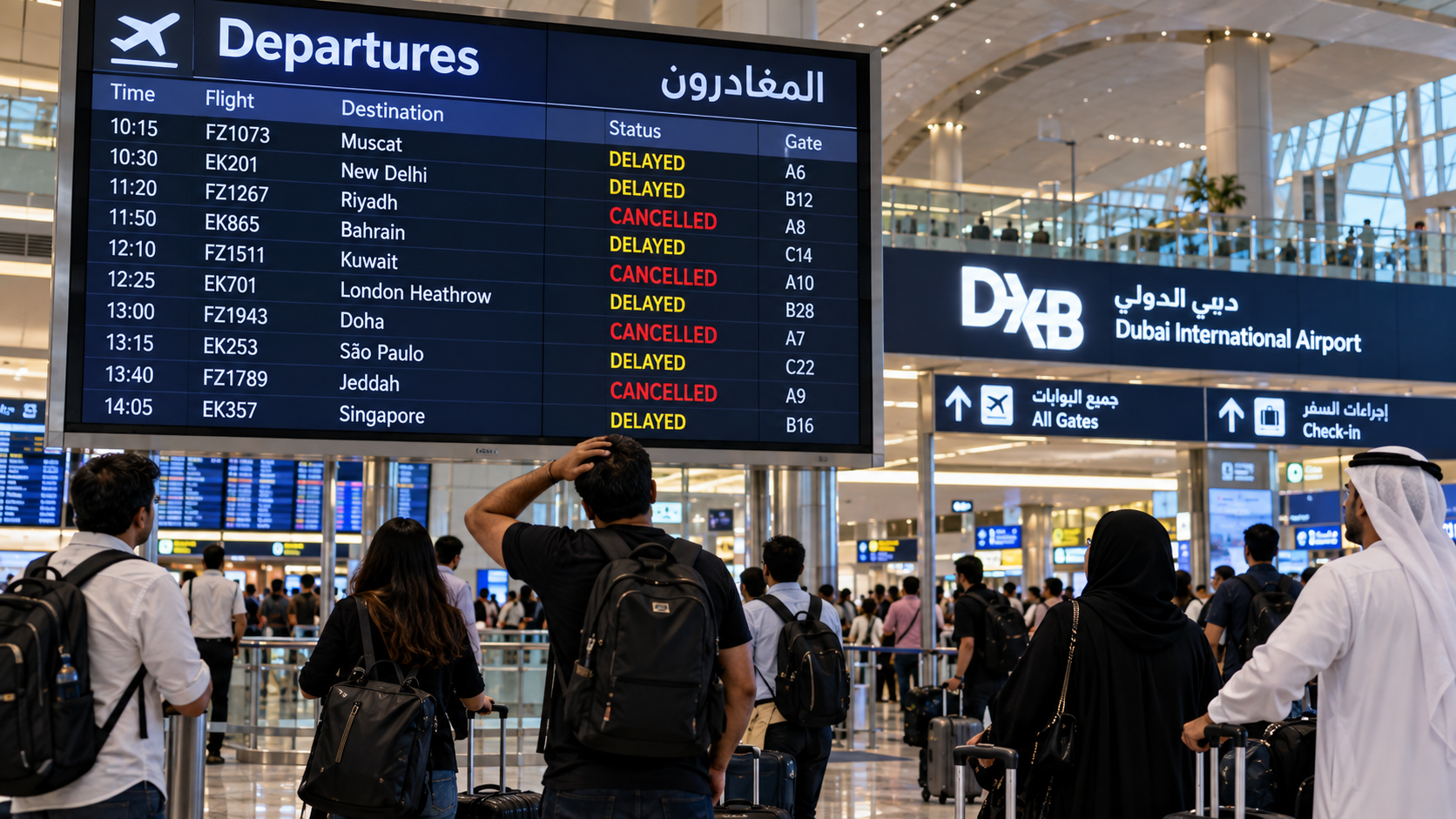
Dubai and Abu Dhabi airports are open and running near normal, but delays and cancellations hit several routes on Monday morning. Some carriers are resuming UAE services while others have extended suspensions.
Airports across the UAE are open, but travellers heading out on Monday morning faced a familiar mix of delays and cancellations as regional tensions continued to shape airline schedules.
Dubai International (DXB), Al Maktoum (DWC) and Abu Dhabi's Zayed International (AUH) are operating at close to normal levels. Even so, several flights from DXB and Zayed were delayed in the early hours, and a number of carriers cancelled services outright.
What happened at DXB and Zayed
At Dubai International, morning delays affected flights operated by Emirates, flydubai, Turkish Airlines, Air India and RwandAir. Among the delayed services were Emirates' flight to Copenhagen and several SpiceJet and Air India Express departures to India, including routes to Delhi, Mumbai and Tiruchirappally.
Cancellations included a SpiceJet service from Dubai to Pune, flydubai's flights to Bangkok and Moscow Vnukovo, and a flydubai service to Abha. In Abu Dhabi, an Air Arabia flight to Amman was delayed.
Etihad Airways reported no major delays or cancellations, though a few individual flights ran late.
Not every disruption is tied to the security situation. Operational and technical issues also play a part, which is why passengers are advised to check directly with their airline before leaving for the airport.
Israel routes remain suspended
The most notable change concerns Israel. flydubai has halted all flights to and from Israel following an incident on a Dubai to Tel Aviv service last week, and Emirates has suspended its codeshare arrangements on the route. Monday's cancellation list included flydubai's Tel Aviv flights operated with Israeli carrier Arkia.
The suspension follows an investigation by UAE authorities into what the prosecutor general has described as an attempted terrorist attack in the cockpit of that flight. The inquiry is continuing.
Carriers coming back, and those staying away
There is some positive news on the resumption front. Air Astana restarted Almaty and Astana services to Dubai on 1 and 2 October. Philippine Airlines has resumed Dubai to Manila flights, with bookings open from 5 October. Lufthansa Group will gradually restore Dubai services from late October, reaching up to 36 weekly flights at peak.
Others are taking a longer view. According to Friday's airline status update, Air France and Wizz Air have suspended Dubai flights until 24 October. British Airways is due to resume Dubai services in November. Cathay Pacific has cancelled Dubai and Riyadh passenger flights through 31 January 2027, and Virgin Atlantic's Dubai flights remain suspended until October 2027. Korean Air's Incheon to Dubai route is suspended until further notice, while Turkish Airlines has resumed Dubai and Abu Dhabi services but still keeps Tehran flights grounded.
Some governments continue to advise their citizens to exercise caution or reconsider travel to the UAE, citing unpredictable regional security conditions and the possibility of airspace closures.
Who is most affected
The pattern on Monday was uneven. Services to India, one of the busiest corridors out of the UAE, saw several delays, while a handful of long-haul and regional flights were cancelled outright. Most other departures operated as scheduled. Passengers on cancelled services are generally offered rebooking or refunds, though the terms depend on the airline and fare type.
Advice for passengers
If you are flying in the next few days, a few simple habits can save stress:
Check your flight status on the airline's app or website before leaving home.
Allow extra time at the airport, especially for regional routes.
If you are connecting through the northern Gulf or on routes near Iran, Iraq or Yemen, expect possible last-minute changes.
Keep contact details up to date so that your airline can reach you quickly.
Review your travel insurance, and ask what is covered if your flight is cancelled.
Why aviation is under watch
The Gulf's airspace is among the busiest in the world, and any escalation around the Strait of Hormuz or Yemen can trigger rerouting. The UAE's hubs have so far kept operations running with limited disruption, which is a significant achievement given the circumstances. But airlines adjust schedules quickly, and a calm morning does not guarantee a calm afternoon.
With fuel prices high and several foreign carriers still staying away, capacity into the UAE remains below normal on some routes. That could keep fares elevated into the busy winter season.
For now, the guidance is simple: the airports are open, most flights are operating, and passengers should confirm before they travel.

Leave a comment
Your email address will not be published. Required fields are marked *