
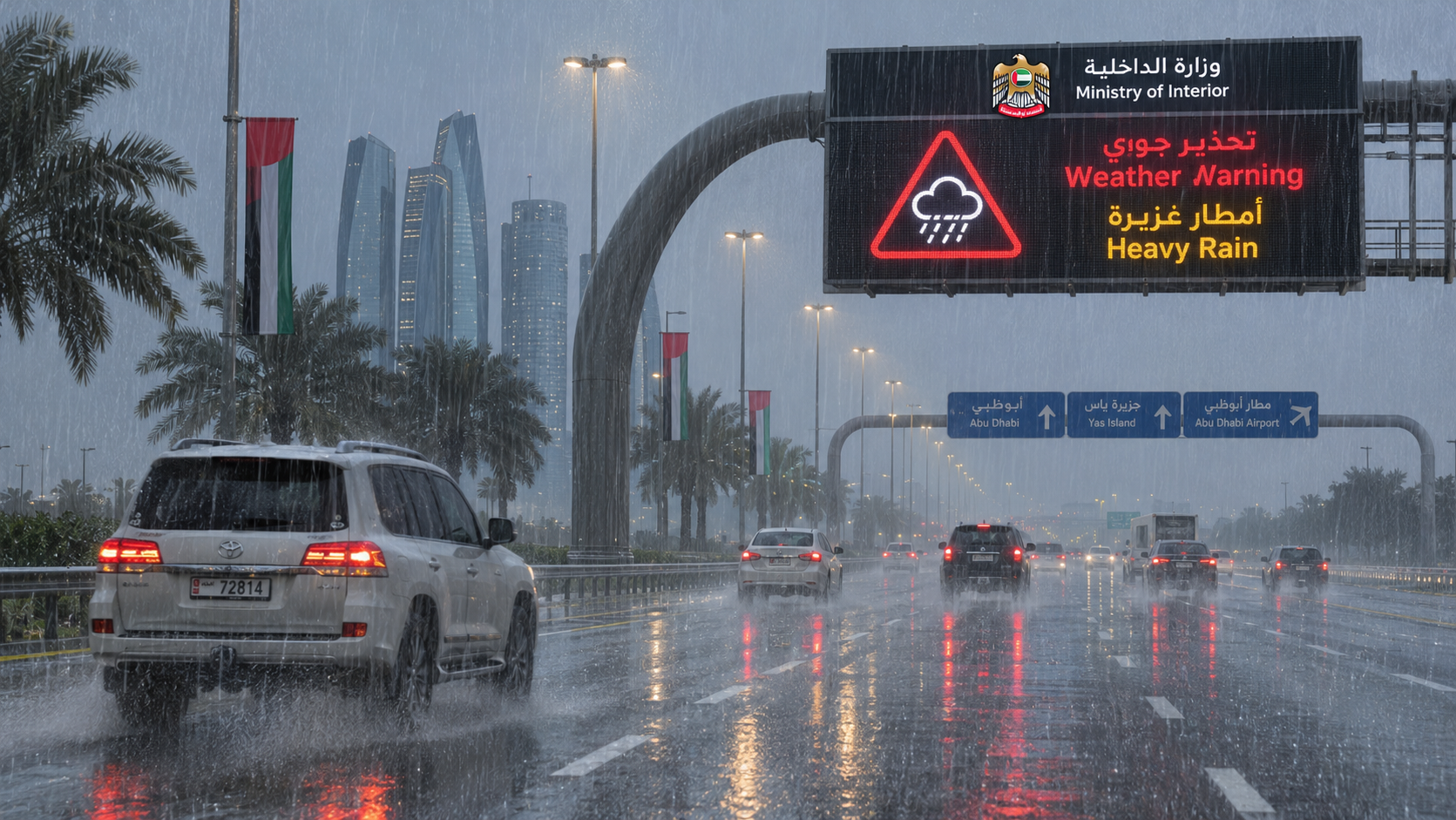
UAE Issues Weather Alert as Rain, Thunder and Hail Expected Across Parts of the Country
The Ministry of Interior has warned drivers and residents to take care as unstable weather brings rain, strong winds, thunder, lightning and possible hail to parts of the UAE. Reduced visibility and flooding in low-lying areas are the main concerns.
Residents across the UAE are being urged to slow down and stay away from flood-prone areas as a spell of unsettled weather moves through the country.
The Ministry of Interior issued the warning through its official account on X, advising the public that rain and winds of varying strength were expected, accompanied by thunder, lightning and occasional hail. In some areas, horizontal visibility could drop sharply.
What the ministry is asking people to do
The advice is practical and aimed mainly at drivers. Motorists should reduce speed, keep a safe distance and stay alert, especially during heavy downpours. People should stay away from wadis and valley channels, where water can gather quickly and flow with little warning, and avoid places where water collects on or beside the road.
The ministry also told residents not to go out to sea or visit beaches while conditions remain unsettled. Rough water, strong gusts and lightning make coastal areas particularly risky during storms.
Why the warnings matter
Rain is not frequent in the UAE, which means roads, drains and drivers are not always used to it. The country receives roughly 100 to 120 millimetres of rain in an average year, according to an astronomy expert quoted this week, though he suggested El Niño could push totals higher.
Even a short burst can leave standing water on highways, reduce grip and make braking distances much longer. Hail, when it falls, can damage vehicles and create slippery patches.
The inland and mountain areas of the northern emirates are particularly vulnerable to flash flooding because water drains quickly through dry valleys. That is why the ministry singled out wadis in its advice.
Authorities prepare
Local authorities have been getting ready. On Wednesday, Sharjah said it had prepared 1,100 staff, 580 tankers and mobile pumps to deal with the rainy season, according to The National. Equipment of this kind is used to clear standing water from roads and residential areas after heavy rainfall.
Practical tips for drivers
The ministry's guidance can be supplemented with some widely recommended habits for wet-weather driving:
Switch on dipped headlights so other drivers can see you. Avoid hazard lights while moving, as they can confuse the traffic behind.
Increase your following distance well beyond normal. Wet roads can double stopping distances.
Brake gently and early. Sudden braking or sharp steering can cause skidding.
Never drive through water when you cannot tell how deep it is. If a road is flooded, find another route.
If visibility is very poor, slow down and, where it is safe, pull over until the heaviest rain passes.
Staying informed
Conditions can change quickly, and the effects will not be the same in every emirate. Residents should follow updates from the National Center of Meteorology and the Ministry of Interior, and check local police accounts for road closures.
Parents are advised to keep children away from flooded streets, drains and water-filled areas. Anyone planning beach trips, desert outings or hikes in the mountains over the next few days should think about postponing them until the weather settles.
In an emergency, residents can contact police on 999 or the civil defence on 997.
Leave a comment
Your email address will not be published. Required fields are marked *