
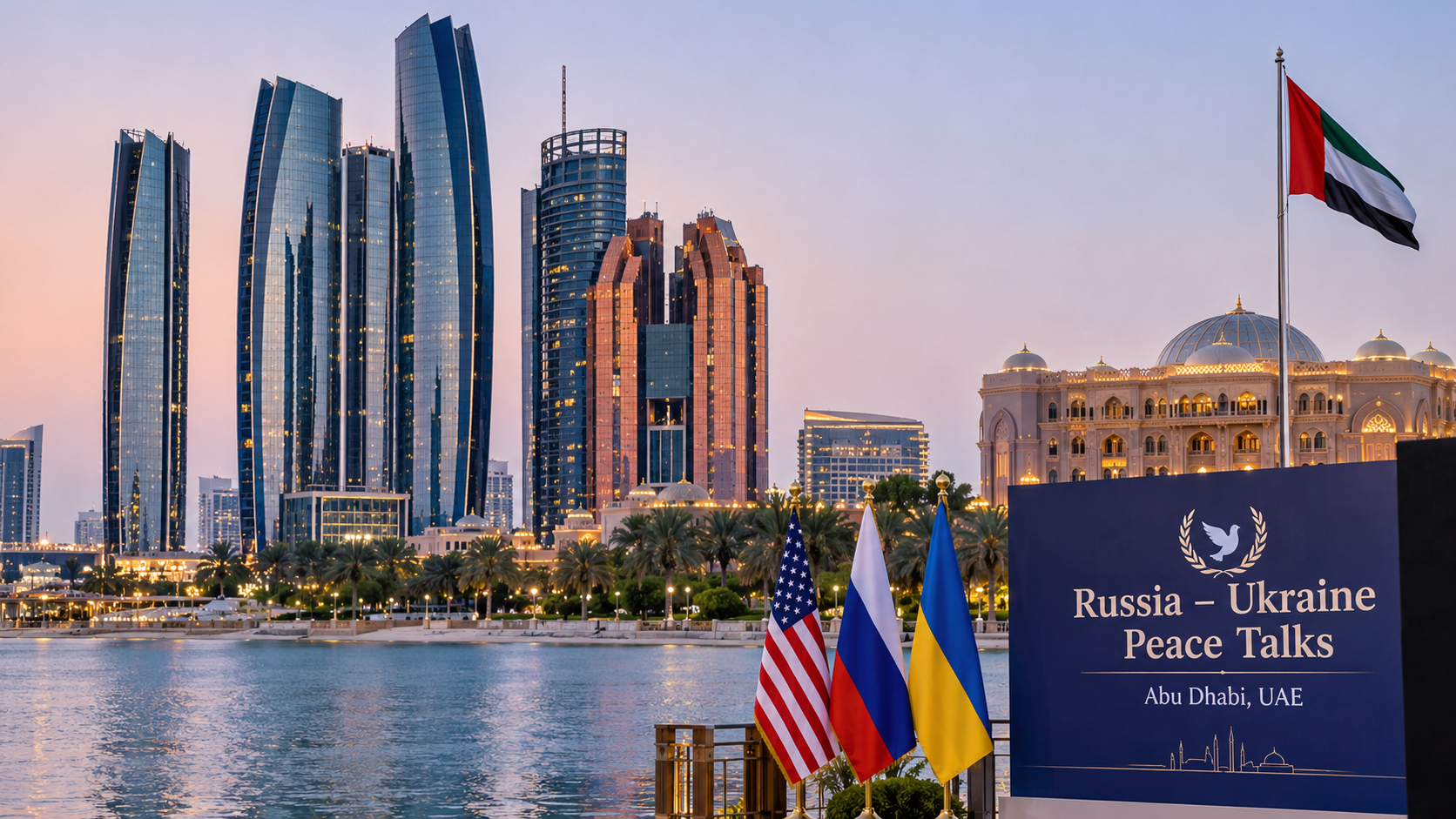
Abu Dhabi to Host Russia-Ukraine-US Peace Talks on 10–11 November
The US says it will bring Russian and Ukrainian delegations to Abu Dhabi on 10–11 November to discuss ending the war, post-war security and humanitarian measures. The new round comes after earlier trilateral meetings in the UAE capital, though the two sides remain far apart.
The UAE capital is set to host another round of US-brokered talks between Russia and Ukraine next week, with American envoy Steve Witkoff saying delegations will gather in Abu Dhabi on 10 and 11 November.
Witkoff, announcing the dates on Monday, said the discussions will cover post-war security arrangements, de-escalation, humanitarian measures and the broader aim of ending the war. A senior US official told Reuters that Witkoff and Jared Kushner, Washington's lead negotiators, are expected to represent the United States.
A new date after earlier uncertainty
The announcement settles weeks of speculation about timing. On 23 October, Kremlin spokesman Dmitry Peskov said talks between Russia, Ukraine and the United States were planned to resume in November in Abu Dhabi, and earlier that week Moscow had said it was ready for a mid-November round. Polish Prime Minister Donald Tusk had separately suggested a leader-level meeting might be tentatively pencilled in for 4 November. The date confirmed by Washington is now 10–11 November.
According to Reuters, Russian President Vladimir Putin agreed to a new trilateral round after meeting Witkoff in St Petersburg about two weeks ago, the latest in a series of American efforts to halt Europe's deadliest conflict since the Second World War.
Why Abu Dhabi
The UAE has become a regular venue for this diplomacy. The first trilateral talks of the war took place in Abu Dhabi on 23 and 24 January, when delegations from Moscow and Kyiv sat across the table for the first time. A second round followed in early February and ended with the two sides agreeing to a new prisoner exchange, though it was not immediately clear whether they had moved closer to a settlement. Earlier, in November 2025, US and Russian officials also met in the emirate.
UAE Foreign Minister Sheikh Abdullah bin Zayed Al Nahyan welcomed the country's role when the first round opened in January. After the February round began, Ukrainian negotiator Rustem Umerov described the first day as "substantive and productive", while US officials spoke of substantial progress between the two sides. Neither description has yet translated into a settlement, but Abu Dhabi has kept its place as the preferred neutral venue.
What is on the table
Reuters reported that the last US-mediated peace talks took place in February, before the United States and Israel launched their war against Iran. That conflict has absorbed much of Washington's diplomatic bandwidth since. Negotiators have been trying to reach a breakthrough before winter sets in, when attacks on energy infrastructure can leave civilians without heat.
Alongside the Abu Dhabi round, a US official said American negotiators will meet at working level this week in Brussels with representatives of France, Germany, Britain, the European Union and NATO. Those talks will focus on security guarantees for Ukraine, Europe's future security framework and economic support for reconstruction.
The gap between the sides
Few analysts expect a quick resolution. Ukraine and Russia remain far apart on the terms of any deal, and Reuters notes that President Donald Trump has recently intensified pressure on Ukraine to accept some form of agreement. Territory, particularly the eastern Donbas region, was the central issue in January and has not gone away.
The battlefield backdrop is grim. Russian strikes on a Ukrainian aid centre and shelter killed 26 people, with around 20 reported missing, according to Business Standard's reporting of the latest attacks. Both countries have also reported cyberattacks on emergency and air-raid alert systems. On the diplomatic side, the United States has approved a $2.1 billion sale of Patriot missiles to Ukraine, funded by allies.
What it means for the UAE
For UAE residents, the immediate impact is likely to be limited. Strategically, the talks keep the UAE at the centre of global diplomacy even as it faces its own security concerns linked to the Iran conflict.
Whether the November round produces more than another prisoner swap remains to be seen. Both sides have described earlier meetings as constructive while making clear that their core demands have not changed. What the new talks can offer is a channel for humanitarian steps and a test of whether security guarantees, the subject of the parallel Brussels discussions, can bridge the divide.

Leave a comment
Your email address will not be published. Required fields are marked *