
UAE's Lana Nusseibeh Puts Sudan at Centre of Her UN Secretary-General Bid
Emirati diplomat Lana Nusseibeh says Sudan would be her top priority if elected UN secretary-general, even as rights groups question the UAE's role in the conflict, an allegation the country denies. Her late entry has shaken up a stalled race to succeed António Guterres.
The UAE's candidate for the world's top diplomatic job is making Sudan the centrepiece of her pitch, and the country's critics are making it the centrepiece of theirs.
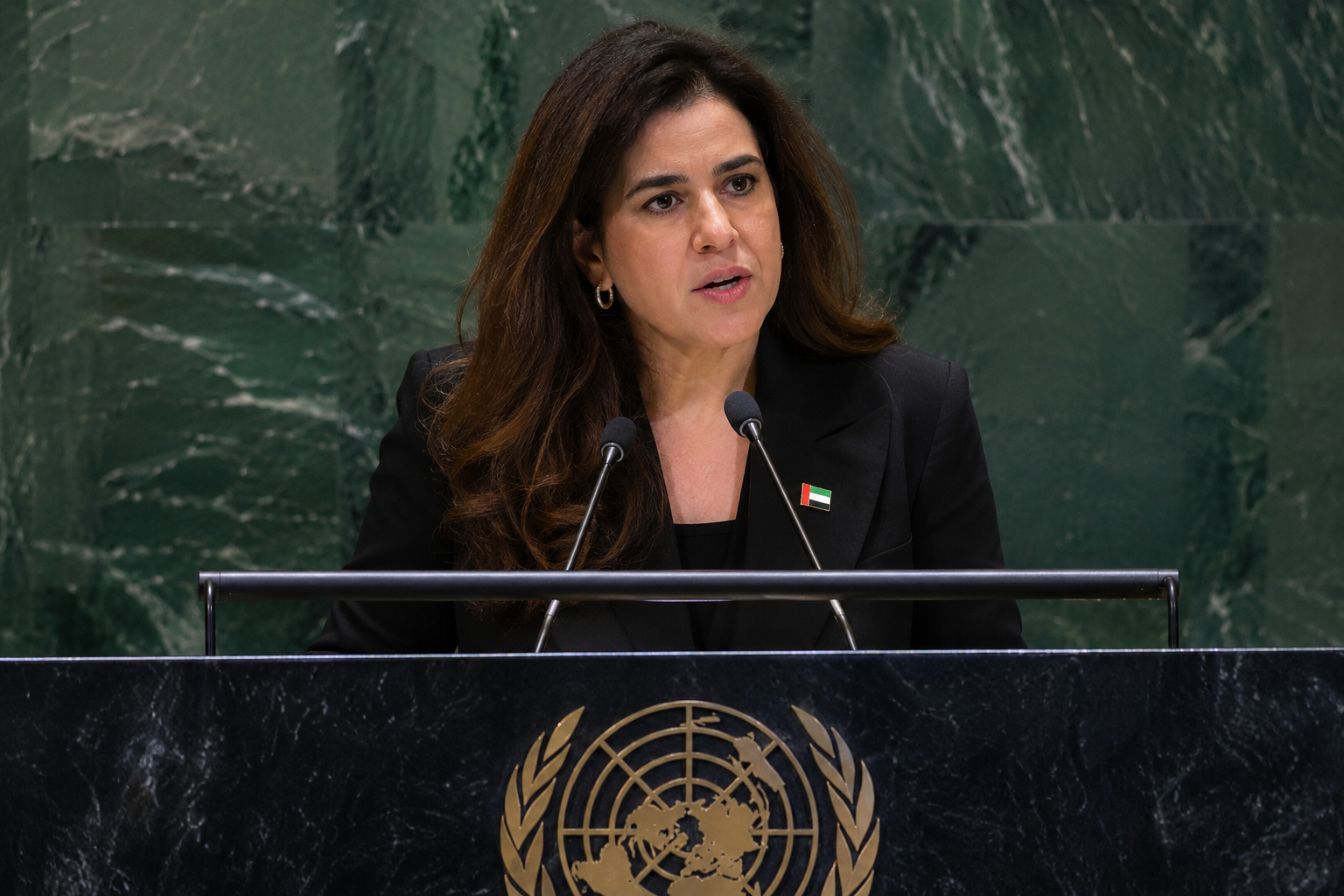
Lana Nusseibeh, a Minister of State and one of the UAE's most senior diplomats, told the UN General Assembly during a candidate dialogue that Sudan would be her number one priority if she became secretary-general, calling it one of the most horrific conflicts in recent history. Speaking to journalists afterwards, she said she would aim to be a "risk-taker" and a prime mover in mediation efforts.
A late entry that changed the race
Nusseibeh entered the contest on 21 October, when UAE President Sheikh Mohamed bin Zayed Al Nahyan submitted her nomination in letters to the presidents of the General Assembly and the Security Council. Reuters reported that her arrival injected a prominent Middle Eastern candidate into a race that had struggled to produce a consensus. Security Council members have since been discussing whether to hold another straw poll.
Aged 48, she served as the UAE's ambassador to the United Nations for more than a decade and has held senior posts within the organisation, including Vice-President of the General Assembly and President of the Executive Board of UN Women. In an eight-page vision statement, she argues that the secretary-general has neither an army nor a vote, but can bring countries together through independence and trust. She has also said the UN must become a problem-solver rather than a spectator to world crises. Announcing her bid, she described the moment as one for acting earlier, uniting people despite their differences and carrying work through until it delivers concrete results.
The Palestinian delegation has publicly backed her candidacy, noting her Palestinian heritage, while she has also defended the UAE's relations with Israel.
How the selection works
Under the UN Charter, the secretary-general is appointed by the General Assembly on the recommendation of the Security Council, where any of the five permanent members can veto a candidate. António Guterres is finishing his second five-year term, and his successor is expected to take office in January 2027. With the field still unsettled, any new entrant can change the arithmetic.
The Sudan question
Her emphasis on Sudan is not accidental. The UAE has faced sustained criticism over the war there after UN sanctions monitors described allegations that it provided military support to the paramilitary Rapid Support Forces as credible. The UAE denies the allegations.
Human rights figures have been unsparing. Kenneth Roth, a former executive director of Human Rights Watch, told a webinar that Nusseibeh had been asked about the UAE's alleged support for the RSF and denied it without regard to the facts. Other critics have argued that electing a senior UAE diplomat would hand the UN's leadership to the government's chief defender at a moment when Sudanese civilians most need powerful states to be held to account. The UAE, as noted, rejects the allegations.
What her supporters say
Supporters point to her record in multilateral negotiations. In her vision statement she cites experiences such as countries at war agreeing to let food and medicine through, adversaries agreeing to release prisoners, and a divided Security Council finding common ground when agreement seemed impossible. Her argument is that results, not rhetoric, rebuild trust in the institution.
She has also been asked about issues beyond Sudan. Asked by Kurdish outlet Rudaw whether she supports Kurdish independence, she did not answer directly, saying that as secretary-general she would handle matters on the Security Council's agenda in line with the UN Charter and Council mandates.
What happens next
The next steps are procedural but consequential: further informal polls in the Security Council, behind-the-scenes lobbying by permanent members and continued scrutiny of every candidate's record. For the UAE, the bid is both an opportunity and a test. It places the country's diplomacy under a global spotlight, along with the unresolved questions about its regional conduct.
Whether Nusseibeh can turn a promise on Sudan into votes in the Security Council will depend on how convincingly she answers critics while keeping the support of governments that see the UAE as a pragmatic mediator.
Leave a comment
Your email address will not be published. Required fields are marked *