
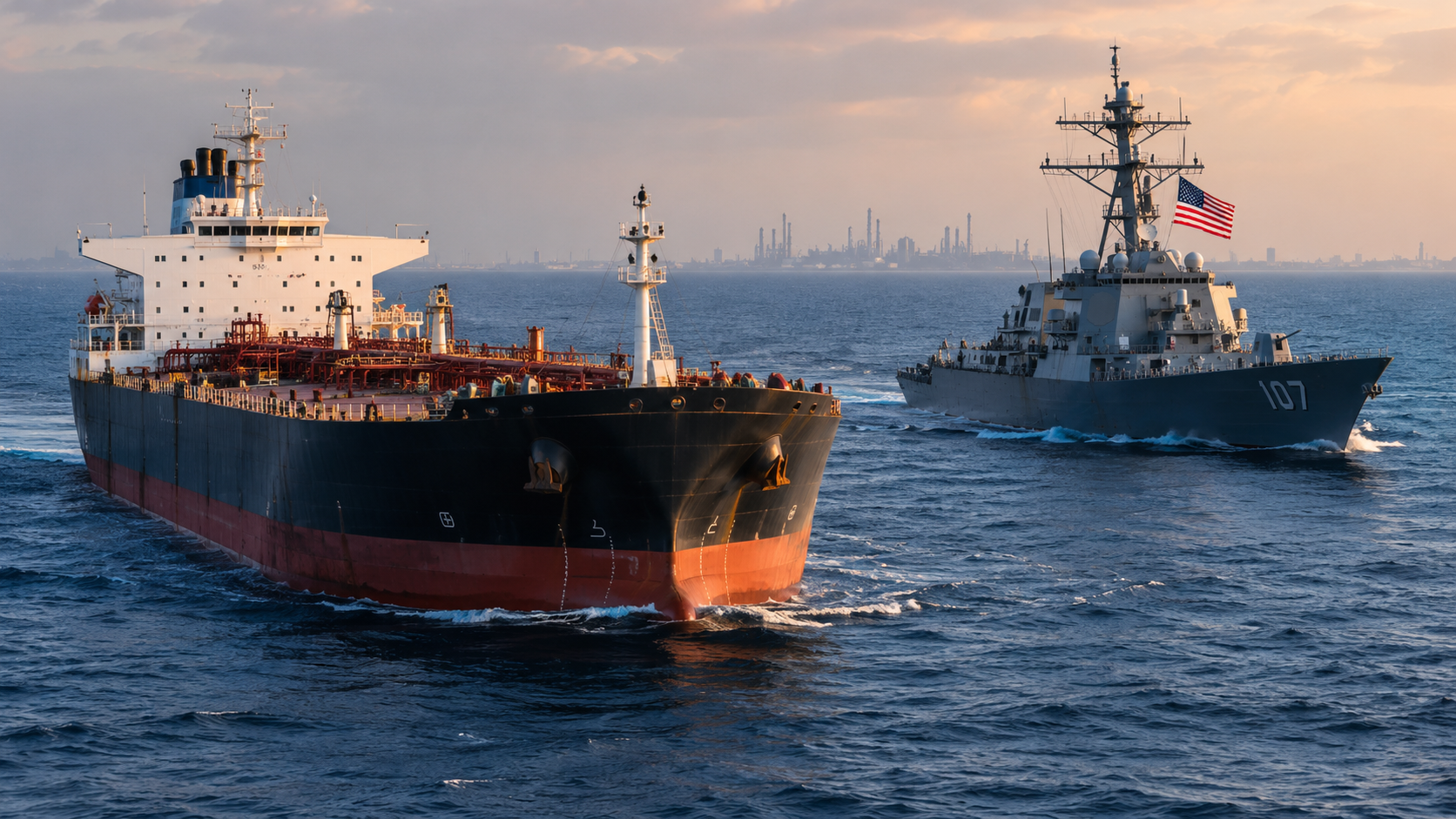
Brent Crude Slides to Two-Month Low as Markets Bet on Iran Diplomacy
Brent crude fell to about $93.63 a barrel on Thursday, its lowest level in roughly two months, as traders bet on talks between Washington and Tehran rather than renewed strikes. Shipping through the Strait of Hormuz remains restricted, and prices are still well above pre-war levels. For UAE residents, the sharper impact has so far come through freight and insurance costs rather than the pump.
Oil prices fell again on Thursday, taking Brent crude to its lowest point in about two months as traders wagered that Washington and Tehran are edging toward negotiations rather than another round of military action.
The Brent crude price stood at $93.63 a barrel in early Asian trading, down roughly 1 per cent on the session. West Texas Intermediate eased to $87.13, while Murban, the Abu Dhabi grade that reflects physical Gulf barrels, slipped to $100.90, according to figures published by Gulf News at 5:59am UAE time.
A steep slide in a matter of days
Thursday's move extends a sharp retreat that began earlier in the week. Brent shed nearly 8 per cent on Wednesday and closed below $100 for the first time since early October. It had peaked near $118 last Friday and settled at $103.60 on Tuesday, which leaves today's price roughly a fifth below that high.
What is moving the market
The sell-off has a political backdrop. Democrats are projected to win control of both chambers of the US Congress after the midterm elections, a result that Vice President JD Vance has blamed on the Iran war. Traders appear to be reading that outcome as added pressure on the White House to pursue a negotiated settlement.
Qatar has also stepped up its mediation efforts, and President Donald Trump has said Washington has no immediate plans to strike Iran. Together, those signals have drawn out some of the risk premium that built up during the most recent escalation.
Why analysts are not calling it a turning point
The caution is considerable. Iranian officials say the two sides remain far from an agreement. US officials, meanwhile, have told Axios that the military is finishing preparations for possible major combat operations. Diplomacy and contingency planning are running side by side.
More importantly, the physical picture has not normalised. Shipping through the Strait of Hormuz is still restricted, and prices below $100 remain well above their levels before the conflict began in February. The roughly $7 premium that Murban carries over Brent futures suggests that actual barrels in the Gulf are tighter than the paper market implies.
The hidden cost: getting oil to market
At the opening of the ADIPEC energy conference in Abu Dhabi on Monday, ADNOC Group CEO Dr Sultan Al Jaber put numbers on that strain. He said nearly one billion barrels of crude have drained from global inventories since the Hormuz disruption began, and that diesel stocks in some markets are at their lowest seasonal level in 35 years.
Delivery has become far more expensive too. Logistics once accounted for less than 5 per cent of what a barrel cost; Al Jaber said it now exceeds 30 per cent. His argument was that energy security should be judged by what actually arrives, not only by how much is produced.
That point matters when reading a falling oil price. A cheaper benchmark does not automatically mean cheaper goods, because freight, war-risk insurance and rerouting costs sit on top of it.
What it means for UAE consumers and businesses
At the pump, the UAE has already seen some relief. Fuel prices for November, announced on 31 October, fell for the first time after three consecutive monthly increases. Special 95 is priced at Dh4.04 per litre, down from Dh4.28 in October. Super 98 is Dh4.16, E-plus 91 is Dh3.97, and diesel is Dh4.75, a smaller drop from Dh4.80. December rates are due around the end of this month, and the direction will depend on where crude settles in the coming weeks.
For importers and exporters, the more practical questions are whether vessels can transit reliably and whether cargo can be insured at a sensible price. Businesses with tight delivery schedules would be wise to review their supply-chain exposure and insurance terms rather than assume that lower oil prices will quickly feed through.
What to watch next
Three developments will shape the next move. The first is whether the Qatar-mediated draft framework produces confirmed talks. The second is whether Washington's military preparations turn into orders, rather than remaining contingency planning. The third is whether ship movements through Hormuz actually pick up, which would be a stronger signal for energy markets than any political statement.
Until at least one of those changes, traders are likely to keep pricing in both hope and risk, and the oil market is likely to stay volatile.


Leave a comment
Your email address will not be published. Required fields are marked *