
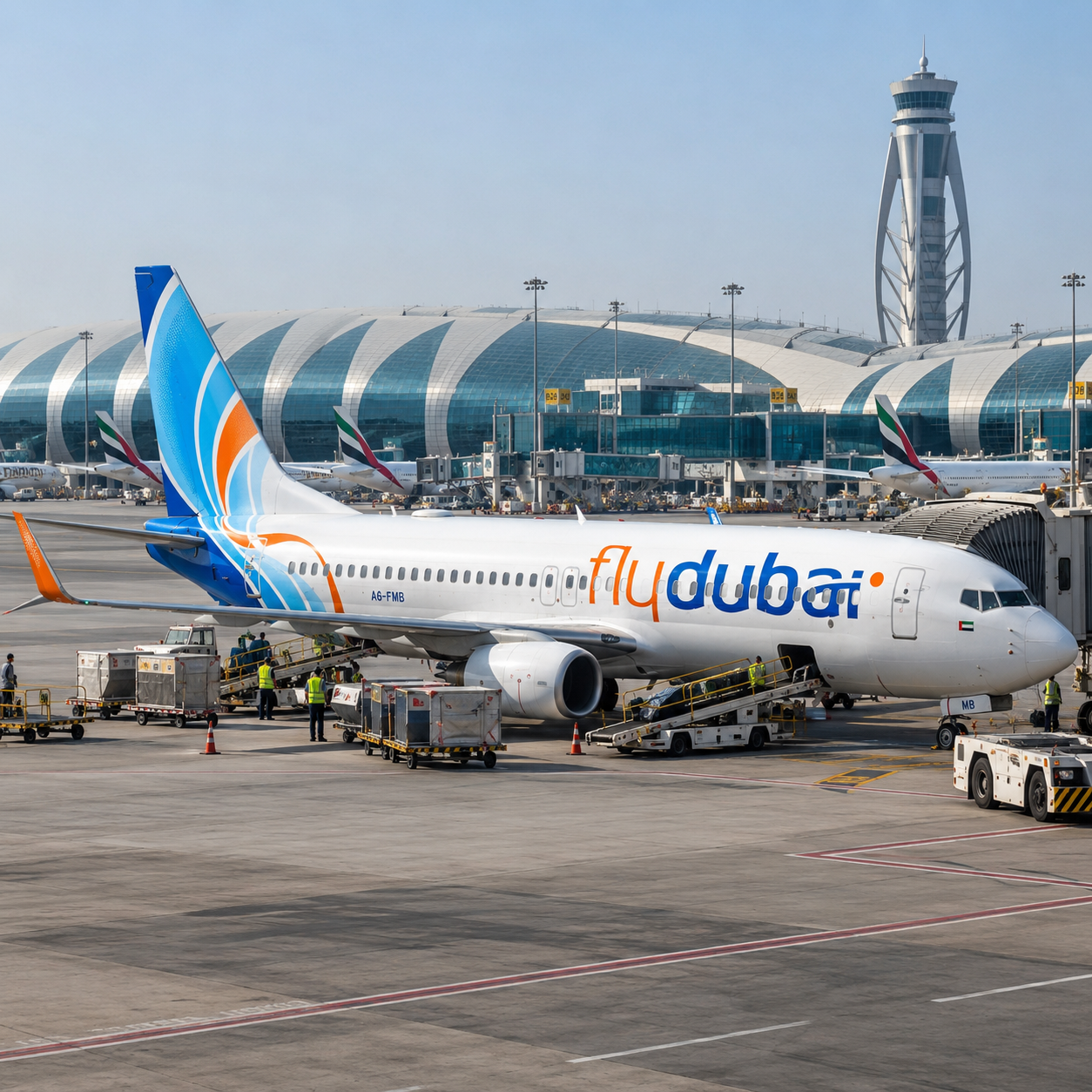
Flydubai FZ1073 Probe Widens to New Zealand and Australia as Co-Pilot's Background Comes Under Scrutiny
New Zealand police have confirmed the flydubai co-pilot at the centre of the FZ1073 investigation completed part of his flight training there in 2018 and 2019, while an Australian counterterrorism unit examines his links to that country. The UAE Attorney-General has said the co-pilot attempted a terrorist act on the 30 September flight. Authorities say motive and any wider connections are still be
Investigators in several countries are now retracing the career of the flydubai co-pilot accused of attacking his captain during a Dubai-to-Tel Aviv flight, as authorities work to establish how a scheduled service turned into what the UAE has formally described as a terrorist act.
The latest development came on Tuesday, when New Zealand police confirmed the man had spent time in the country earlier in his career. In a statement to Reuters, Assistant Commissioner Michael Johnson said immigration records show he arrived on 30 November 2018 and left on 23 May 2019, travelling on a six-month student visa. Police said he was there to complete part of his flight training for a UK-based company that no longer operates in New Zealand. Officers are reviewing records and making inquiries about the period he spent there.
Australia opens its own line of inquiry
New Zealand is not the only country looking at his past. A multi-agency counterterrorism unit in Australia is separately examining the co-pilot's links to that country, according to local police. Neither the UAE authorities nor flydubai have publicly named him, so the picture assembled so far rests on official statements rather than on a full public profile.
What the UAE says happened on FZ1073
The UAE's own findings were set out on 3 October by Attorney-General Dr Hamad Saif Al Shamsi. He said investigators had concluded that the co-pilot attempted to carry out a terrorist act during the flight, which left Dubai on 30 September. According to the investigation, he attacked Captain Smit Machchhar inside the cockpit with the aircraft's crash axe and tried to take over the flight controls.
Officials say the inquiry is far from finished. Technical examinations continue, along with analysis of physical and digital evidence, and the authorities are still working to establish the full circumstances, the motive and any related links. Final findings, they have said, will be announced once all procedures are complete.
The captain's account
Machchhar has described the attack in his own words, first in a video call from his hospital bed with Indian Prime Minister Narendra Modi and then in a conversation with Israeli Prime Minister Benjamin Netanyahu on 3 October. He recalled a heavy blow to the back of his head and a first instinct that something had gone catastrophically wrong with the aircraft. Only when the blows kept coming did he understand the danger was sitting beside him.
As the aircraft pitched downward and his vision faded, he managed to open the cockpit door, only for the attacker to shut it again. Lying on the floor and hearing screams outside, he reached up, turned the handle once more and let his colleagues in. He has since been visited by Sheikh Hamdan, has returned to the UAE, and has received an invitation to visit Israel from Mr Netanyahu.
Panic in the cabin, then a diversion to Tabuk
For passengers, the first sign of trouble was physical: the aircraft suddenly dropped. One traveller told the BBC the descent felt like an air pocket at first, until it kept going. Another described the screams of children. Several passengers spoke of being convinced the aircraft was lost.
When the cockpit door opened, passengers and crew moved forward and helped overpower the co-pilot. Witness accounts say he was first held down with a headphone cord and later secured with plastic zip ties while others tended to the injured captain. Off-duty crew travelling on the flight then secured the aircraft and diverted to Tabuk Airport in Saudi Arabia, where it landed safely. Flydubai has not said which pilot flew the landing.
The General Civil Aviation Authority praised the speed and courage of the captain, the crew and the passengers who stepped in. Flydubai chief executive Ghaith Al Ghaith also thanked the pilots who landed the aircraft, the cabin crew and the travellers who helped.
Impact on passengers
The disruption has reached well beyond the aircraft involved. The GCAA said it has arranged transfers to Tel Aviv for 7,479 passengers after flydubai suspended flights on the route. Questions about cockpit safety have also followed, including whether crash axes are carried on every flight and what UAE rules say about them.
What is still unknown
Several basic questions remain open: the co-pilot's identity, his motive, and whether anyone else was involved. The New Zealand and Australian inquiries suggest investigators are examining his training history and movements over several years, not only the events of 30 September. For now, the UAE's position is that the attack was a terrorist act, and that the full account will come only when the investigation concludes.
For Dubai's travelling public and the wider aviation community, the case is likely to stay in the headlines as each new detail emerges from the three countries now involved.

Leave a comment
Your email address will not be published. Required fields are marked *