
Houthis Claim Major Missile-and-Drone Attack on Saudi Air Base as Gulf States Condemn Escalation
Yemen's Houthi movement says it launched a large missile and drone assault on a major Saudi air base in the kingdom's south, marking a sharp escalation in the group's confrontation with Riyadh. Arab and Gulf governments, including the UAE, have condemned the strike as a violation of Saudi sovereignty, while the wider region braces for further fallout.
Gulf Nations Rally Behind Saudi Arabia After Fresh Houthi Assault
Tensions across the Arabian Peninsula ratcheted up sharply on Monday after Yemen's Houthi movement claimed responsibility for a large-scale missile and drone assault on a major Saudi military installation, prompting a wave of condemnation from Gulf and Arab governments, including the United Arab Emirates.
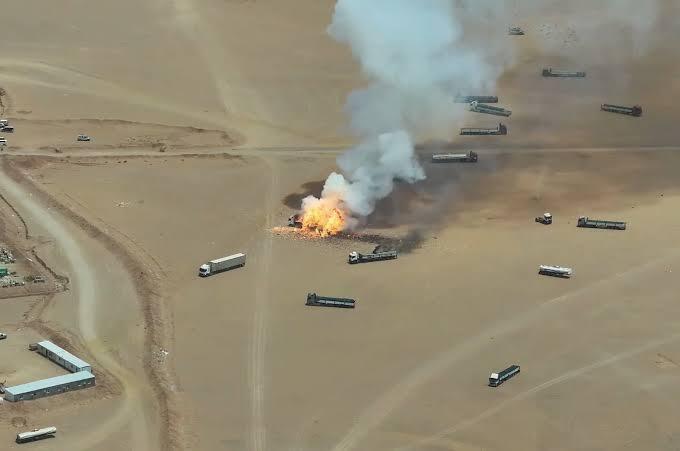
The Iran-aligned group said its forces had struck a key air base in southern Saudi Arabia using a combination of ballistic missiles and drones, targeting hangars, radar systems, runways and ammunition stores. A military spokesman for the group described the operation as inflicting heavy damage on the facility and framed it as retaliation for a string of Saudi airstrikes carried out inside Yemen over the preceding days.
Saudi authorities had not issued a detailed public accounting of the damage by Monday morning, though the kingdom's civil defense and energy officials have in recent days confirmed casualties and fires linked to a string of Houthi strikes on the country's south. Riyadh has consistently rejected the legitimacy of such attacks and vowed a firm response.
A Rapidly Escalating Front
The latest strike is the newest chapter in a conflict that reignited earlier this year after a fragile truce between Riyadh and the Houthi movement collapsed. Since then, fighting has spread across multiple fronts in Yemen, with government-aligned forces claiming territorial gains in the west of the country even as the Houthis have pushed toward strategically vital points along the Red Sea coastline, including areas near the Bab al-Mandeb Strait one of the world's busiest and most sensitive shipping corridors.
Analysts have warned that the intensifying confrontation threatens to squeeze maritime traffic through the strait at a moment when a separate, long-running standoff between the United States and Iran has already curtailed the flow of oil tankers through the Strait of Hormuz. Together, the two chokepoints handle a substantial share of the world's seaborne energy trade, and disruption to either has historically sent ripples through global crude markets.
UAE and Gulf Partners Voice Solidarity
The UAE's Ministry of Foreign Affairs and International Cooperation reiterated the country's unwavering solidarity with Saudi Arabia, describing recent Houthi attacks on Saudi cities and commercial vessels as a clear violation of the kingdom's sovereignty and a threat to regional stability. The ministry called for the international community to stand behind measures aimed at protecting the security of the Gulf and preserving freedom of navigation in international waters.
Other Gulf Cooperation Council members echoed the sentiment. Kuwait's government labeled the attacks a flagrant breach of international law, while the GCC's secretary-general characterized the strikes as a deliberate disregard for civilian safety. The chorus of condemnation reflects a broader Gulf consensus that has held firm since fighting between Riyadh and the Houthis resumed, with member states repeatedly stressing that the kingdom's security is inseparable from that of its neighbors.
Impact on Regional Stability and Markets
The renewed hostilities arrive at a delicate moment for the wider region, which has spent nearly three years navigating overlapping conflicts, from the Gaza war's regional reverberations to the intermittent flare-ups between Washington and Tehran. Energy analysts tracking the situation note that any sustained disruption to Saudi oil infrastructure or Red Sea shipping lanes could push crude prices higher, adding further uncertainty to an already jittery global economy.
For UAE residents and businesses, the escalation is being watched closely given the country's deep economic and security ties with Saudi Arabia and its own recent experience of Houthi missile and drone attacks. The UAE has previously stated it reserves the right to respond firmly to any threat against its territory, a position officials have reaffirmed amid the latest developments.
What Happens Next
Diplomatic sources suggest Saudi Arabia is coordinating closely with international partners, including Western military allies, on potential response options, though the scale and timing of any retaliation remain unclear. Meanwhile, Yemeni government forces continue to report gains in some provinces even as the Houthis consolidate their hold on strategic coastal territory.
For now, the message from the Gulf's capitals has been one of unity. As the situation develops, regional governments are expected to continue pressing for international intervention to protect civilian infrastructure and safeguard the shipping lanes that much of the global economy depends on. Residents across the Gulf, including in the UAE, are being urged to stay informed through official channels as the situation evolves hour by hour.


Leave a comment
Your email address will not be published. Required fields are marked *