
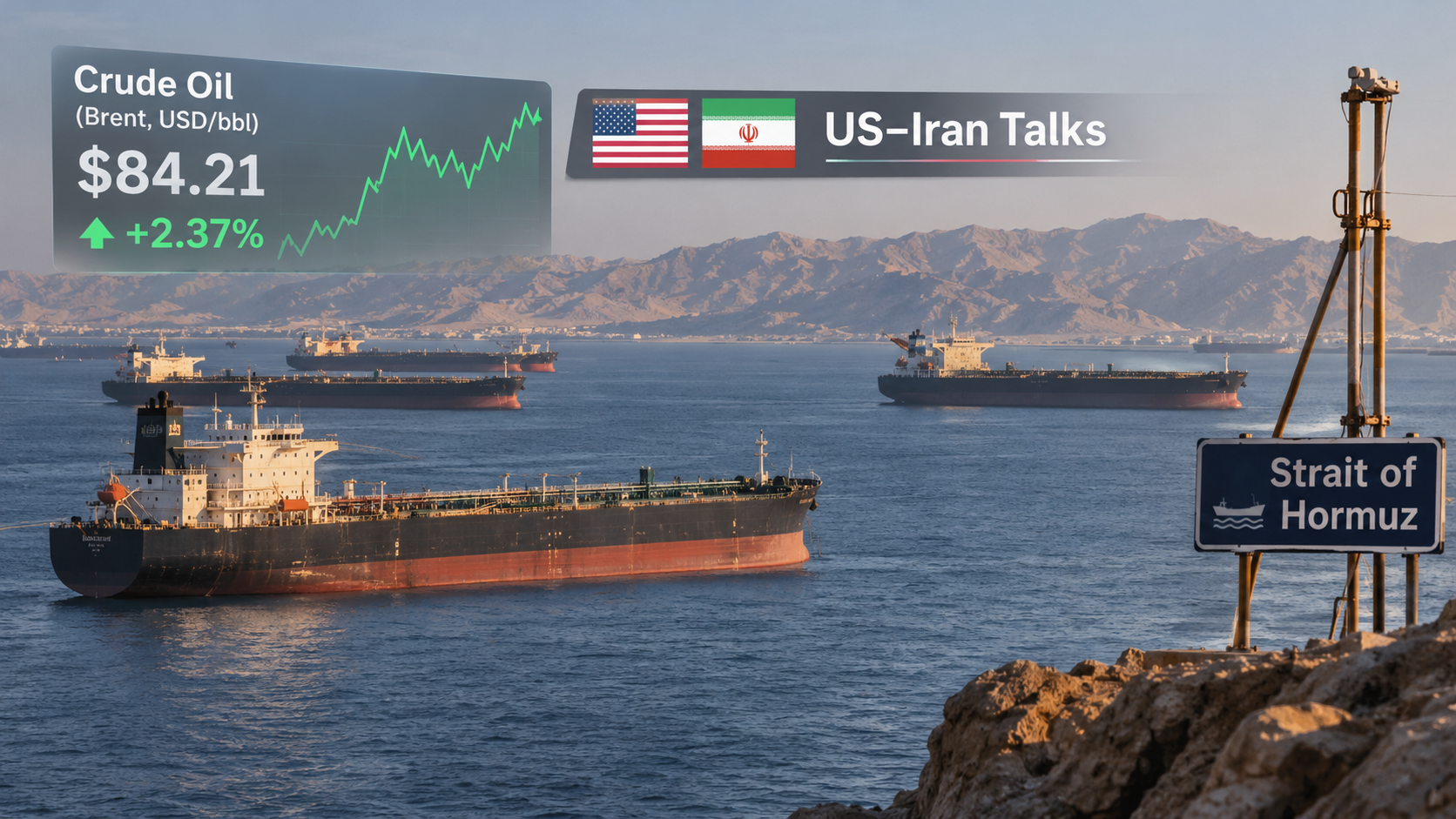
Oil Retreats on Hormuz Peace Hopes, Then Wobbles After Reported US Strike on Qeshm Island
Brent crude fell more than seven per cent as Qatar-mediated talks raised hopes of reopening the Strait of Hormuz, before edging higher on a report of a US strike on Iran's Qeshm Island. The UAE says it is backing diplomacy while staying prepared.
Oil prices gave back a large part of their October gains on Monday as hopes grew for a diplomatic route out of the eight-month US-Iran conflict, only for the mood to wobble in early Asian trading on Tuesday after reports that the United States had struck Iran's Qeshm Island. The swings capture the uncertainty facing the Gulf, and the UAE in particular, as talks over the Strait of Hormuz continue.
The market swing
Brent crude settled $8.66, or 7.63 per cent, lower at $104.77 a barrel on Monday, according to Reuters. Prices ticked up in early Asian trade on Tuesday after the Wall Street Journal reported the strike on Qeshm, with traders worried about a fresh escalation and prolonged disruption to Middle East supplies. Gulf News, citing market data, reported that WTI slipped below the psychological $100 mark and that Murban, the Abu Dhabi benchmark, fell by more than 11 per cent at one stage to about $105.
The scale of the drop reflects how much geopolitical risk had been priced in. Brent had ended October at its highest in six months, on concern that the conflict could flare again after the US midterm elections, which take place on Tuesday. Before the conflict began in late February, roughly a fifth of the world's traded crude and gas passed through the Strait of Hormuz. Traffic there has since fallen sharply.
Diplomacy: a two-day plan on the table
The relief rally followed several days of Iranian talks with Qatari mediators. Iranian Foreign Minister Abbas Araghchi said the discussions had produced what he called a two-day plan, under which the United States would take a set of steps on the first day and the Strait of Hormuz would reopen, with navigation returning to normal, on the second. It is a shortened version of an earlier seven-day proposal. It is a proposal rather than an agreement, and Washington has not publicly accepted it.
Iran's foreign ministry said the next move rested with the United States and insisted that the strait could not be reopened or secured unless the US naval blockade ended and Tehran's demands were met. It added that messages continued to pass through intermediaries, with Qatar and Pakistan playing active roles. Iranian President Masoud Pezeshkian said the country's supreme leader had given the government certain powers in the talks.
President Donald Trump, meanwhile, struck a mixed note. He raised doubts about whether he would resume threatened strikes and said a deal with Tehran was possible, while also suggesting that striking the Fordow nuclear site could be done quickly if required.
The Qeshm report
The Wall Street Journal, citing US officials, reported that American forces struck Qeshm, the largest island in the Strait of Hormuz, on Monday night. Some officials described the action as defensive, aimed at stopping Iran from threatening commercial shipping, and as one of a series of limited strikes carried out in recent weeks, not a return to a full military campaign.
Iranian state media reported five explosions on the island in quick succession but gave no cause. The Revolutionary Guards claimed they had downed US drones near the strait. US Central Command dismissed one of those claims as false, and the Pentagon has not confirmed the others. None of the claims could be independently verified.
Where the UAE stands
The UAE has been one of the countries most directly affected by the conflict, and its official line has been consistent. In a statement on Sunday, the Ministry of Foreign Affairs condemned in the strongest terms an attack on the Qatari LNG tanker Al Mayeda in the Arabian Gulf, calling it a grave threat to the safety of navigation and global energy supplies and a dangerous escalation. Officials say the country continues to push for a diplomatic breakthrough while remaining prepared for further escalation.
Iran's foreign ministry spokesman said on Monday that Tehran bore no hostility towards its Gulf neighbours but added that it could not stay silent if the territory of regional states were used against it. He said some Gulf states had placed excessive trust in the US military presence.
What it means for residents and business
For households in the UAE, the most visible effects have been felt in travel and logistics rather than at the pump. Gulf News reported continuing delays and cancellations at Dubai, Abu Dhabi and Sharjah airports, with Etihad extending cancellations on selected Saudi routes until 5 November and other carriers adjusting schedules. Elsewhere, Ryanair warned on Monday that its fuel bill would rise by around 2 billion euros next year, a sign of how far jet fuel costs are spreading through the aviation industry.
For businesses, the next few days matter. A deal that reopens Hormuz would ease shipping and insurance costs and lower the price of energy, while a collapse in talks would push both higher. The UAE's energy leaders have been telling the ADIPEC conference this week that delivery, not only production, now determines security of supply.
What to watch
Three developments will shape the week: the outcome of the US midterm vote, any formal US response to the two-day plan, and whether the limited strikes remain limited. Until then, analysts and officials alike are treating each headline as provisional, and the oil market is moving with them.
Leave a comment
Your email address will not be published. Required fields are marked *