
UAE Flag Day 2026: Sheikh Mohamed Raises the Flag at Qasr Al Hosn With 55 Achievers
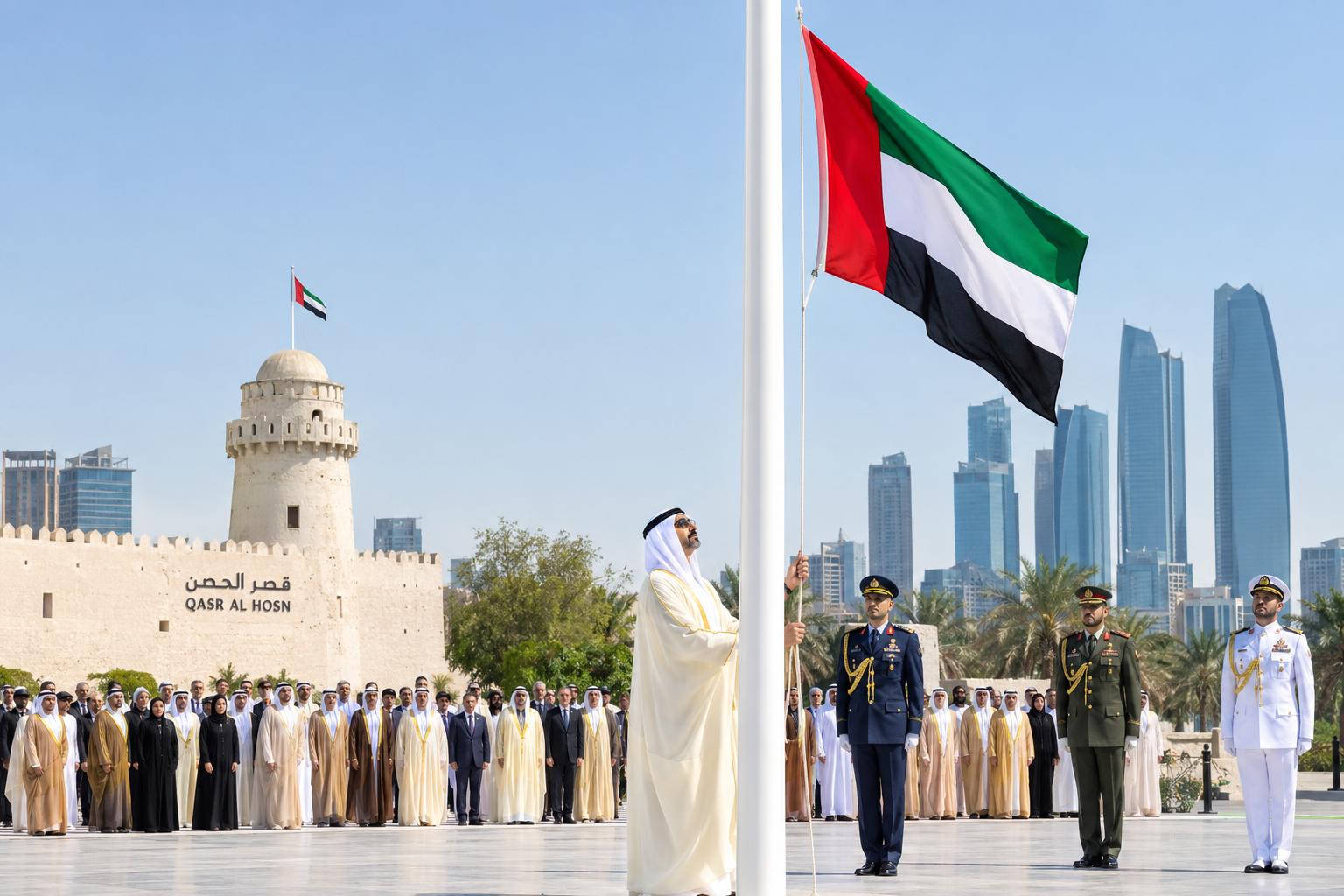
President Sheikh Mohamed bin Zayed led the UAE's 14th Flag Day at Qasr Al Hosn, joined by 55 accomplished people representing each year of the Union. Leaders across the Emirates, along with schools and workplaces, raised the flag at 11am.
President Sheikh Mohamed bin Zayed Al Nahyan raised the national flag at Qasr Al Hosn in Abu Dhabi on Tuesday morning, opening the UAE's 14th Flag Day with a ceremony that put people, rather than pageantry, at its centre. Beside him stood 55 accomplished individuals from a range of sectors, one for each year since the emirates joined together in 1971.
In a post on X, the President said he was honoured to mark the occasion with the group, and he framed the day as a moment to reflect on the journey begun by the late Sheikh Zayed and his fellow Rulers. He said the country looks ahead with confidence to its people, whose ambition and determination, in his words, will keep driving national progress and prosperity. The 55 guests said they were proud to join him, and he posed with them for commemorative photographs.
A fort with a long memory
The choice of venue carried its own message. Qasr Al Hosn is among the oldest and most historically significant landmarks in Abu Dhabi, a fort that once served as the seat of the ruling family and now stands as a symbol of the city's early years. Raising the flag there, with a group meant to embody the Union's 55 years, drew a line between the country's foundations and the generation now shaping its future.
Messages from across the leadership
Other senior figures marked the day in their own ways. Sheikh Mohammed bin Rashid Al Maktoum, Vice President, Prime Minister and Ruler of Dubai, said in a post on X that the flag is raised with pride in what the country has built and achieved, and with a pledge that it will stay high and its ambitions limitless. Sheikh Hamdan bin Mohammed, Crown Prince of Dubai, shared a video describing the flag as a symbol of national pride and unity.
Sheikh Mansour bin Zayed Al Nahyan, Vice President, Deputy Prime Minister and Chairman of the Presidential Court, called the flag a symbol of the country's strength, sovereignty and shared achievements. In Abu Dhabi, Sheikh Khaled bin Mohamed bin Zayed, the Crown Prince, raised the flag in front of the Zayed National Museum.
Residents and citizens had been asked to raise the flag at 11am, and the call was answered widely. Ministries, government entities, universities, schools, homes and office buildings took part. Pupils at schools across the country, among them Repton School in Al Barsha, Dubai, held flag-raising ceremonies of their own. Flag Day is not a public holiday, so many people marked it on the way to work or between lessons, which is part of its character: a short, shared pause in an ordinary day.
Sheikh Mohammed bin Rashid had urged institutions and the public in all seven emirates to take part when he announced the date last week. The flag, he said then, should be raised high and proud. Authorities also remind the public each year that the national flag must be displayed according to strict guidelines.
Why November 3
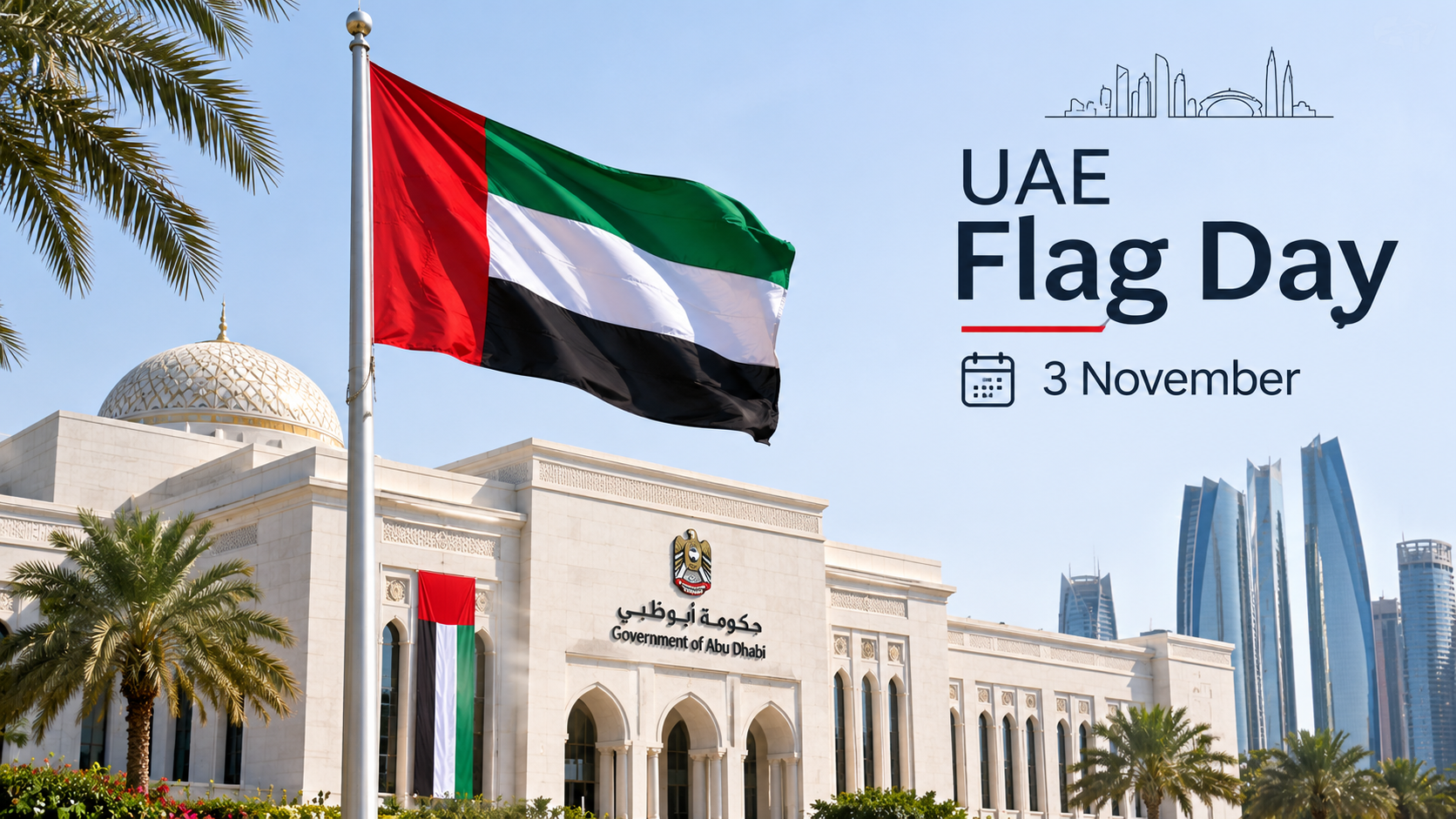
Flag Day was introduced in 2013 by Sheikh Mohammed bin Rashid. The date marks the anniversary of the late Sheikh Khalifa bin Zayed Al Nahyan becoming President on 3 November 2004, following the passing of Sheikh Zayed. Over the years it has grown from a single initiative into a fixture of the national calendar, a day that sits between the autumn start of the school and business year and the larger celebrations of December.
The flag itself is the work of Abdullah Mohammed Al Maainah, who designed it as a young man, and it was first raised at the founding of the Union. Its four colours of red, green, white and black are read by Emiratis as symbols of sacrifice, prosperity, peace and strength. Each year, the occasion is used to renew a simple idea: that the flag is a shared possession of everyone who lives under it.
A national moment at a sensitive time
This year's observance arrives while the wider region remains tense. The UAE has spoken out repeatedly against attacks on shipping and on its neighbours, and Emirati officials have said the country continues to press for diplomacy while staying prepared. At an energy conference in Abu Dhabi on Monday, the head of ADNOC said the UAE's approach had been tested under pressure and that talent, capital and investment had stayed in the country. Against that backdrop, the choice of a ceremony built around the achievements of ordinary people, rather than a display of force, reads as deliberate.
What comes next
Tuesday also marks the start of a run of national commemorations. The next major date is Eid Al Etihad on 2 December, when the UAE will mark the 55th anniversary of the Union. Expect further announcements from federal and local authorities in the coming weeks, along with cultural programming, school events and community activities themed around unity and national identity.
For residents who missed the 11am moment, the day's message is easy to take home: the flag is raised not only in official courtyards but in schools, workplaces and homes, and its meaning is renewed each time it is.
Leave a comment
Your email address will not be published. Required fields are marked *