
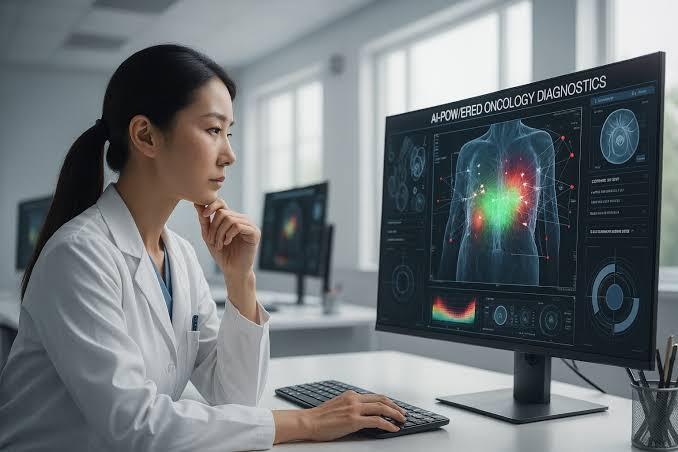
UAE Doctors Turn to Artificial Intelligence to Unlock Why Cancer Treatments Work for Some Patients but Not Others
Cancer specialists in the UAE are increasingly relying on artificial intelligence to explain why patients with seemingly identical diagnoses respond so differently to the same treatments. The push reflects a broader national effort to fold AI into everyday clinical decision-making and move closer to truly personalized cancer care.
When Two Patients, One Diagnosis, Get Two Very Different Outcomes
It's one of the most stubborn puzzles in oncology: two patients can share the same type and stage of cancer, receive the very same course of treatment, and still end up with dramatically different results. One recovers well. The other doesn't respond at all. For decades, doctors have had only partial answers as to why. Now, cancer specialists across the UAE are turning to artificial intelligence in hopes of closing that gap.
Medical teams in the country are increasingly deploying AI-driven analysis to sift through vast amounts of patient data genetic markers, treatment histories, cellular responses and more searching for patterns that explain why therapies succeed in some cases and fail in others. The goal, according to specialists involved in the effort, is to move beyond broad treatment protocols and toward genuinely individualized care.
Building Smarter Tools for Treatment Decisions
The push is about more than academic curiosity. Clinicians say the ultimate aim is to give doctors better tools for treatment decisions in real time, while also helping pharmaceutical companies understand more precisely why a given therapy performs differently across patient populations. That understanding, in turn, could accelerate the development of more targeted drugs and reduce the trial-and-error nature of much of today's cancer care.
This approach sits at the intersection of two of the UAE's biggest strategic bets: healthcare innovation and artificial intelligence leadership. The country has spent much of the past decade building out AI infrastructure and positioning itself as a global hub for the technology, and health officials are now looking to translate that investment into tangible clinical benefits.
Part of a Wider National AI Push
The cancer initiative is emblematic of a much broader pattern taking shape across the UAE's public and private sectors. The country has recently ranked at or near the top of global indices measuring AI adoption, digital government services and institutional readiness for emerging technology. Alongside healthcare, authorities have rolled out agentic AI systems intended to speed up government decision-making, while education officials have signaled plans to expand AI's role in classrooms.
Healthcare specifically has emerged as one of the more promising early testing grounds for these ambitions, given the sheer volume of structured data lab results, imaging, treatment records that modern hospitals generate and that AI systems are particularly well suited to analyzing at scale. Cancer care, with its complex mix of genetic, environmental and treatment-response variables, is widely seen as an area where machine learning could offer some of the clearest near-term benefits.
Caution Alongside Optimism
Even as enthusiasm builds, specialists working in the field are careful to frame AI as a support tool for clinicians rather than a replacement for medical judgment. The technology's role, as described by those involved, is to surface patterns and correlations that would be difficult or impossible for a human specialist to detect unaided — not to make final treatment calls independently. Oversight, validation against clinical outcomes, and careful integration into existing hospital workflows remain central to how these tools are being introduced.
There is also a broader conversation happening in medical circles about ensuring that AI-driven healthcare tools remain accessible and equitable, rather than benefiting only patients at the most well-resourced facilities. That question is likely to shape how quickly and widely these cancer-focused AI tools are rolled out across the UAE's hospital network in the months ahead.
What This Means for Patients
For patients and families navigating a cancer diagnosis, the promise of this research is straightforward, even if the underlying science is complex: better-informed decisions about which treatment path is most likely to work for their specific case, rather than a one-size-fits-all approach based on cancer type and stage alone.
While it will likely take time before AI-assisted treatment planning becomes standard practice across UAE hospitals, the direction of travel is clear. As one of the world's most AI-forward nations continues to channel that ambition into medicine, cancer specialists in the country say the technology could eventually help close one of oncology's most persistent and painful gaps the difference between a treatment that works and one that doesn't.

Leave a comment
Your email address will not be published. Required fields are marked *