
UAE Sets Fines of Up to Dh750,000 for Non-Muslim Places of Worship That Breach Rules
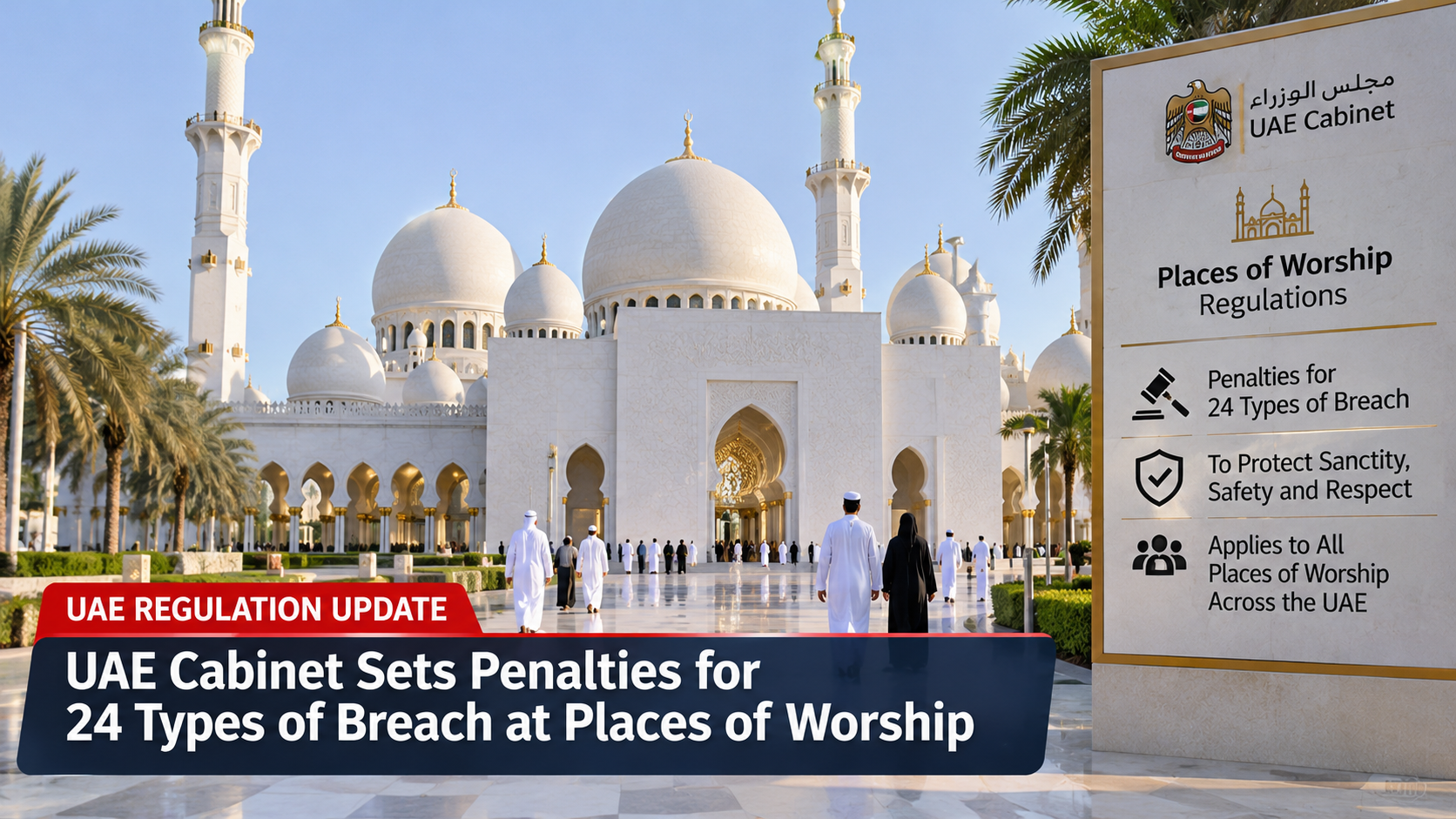
A Cabinet decision in force since 14 October lists 24 types of breach for non-Muslim places of worship, with penalties ranging from warnings to fines of up to Dh750,000 and temporary suspension. Officials say the rules update enforcement rather than adding new restrictions.
Non-Muslim places of worship in the UAE can face fines of up to Dh750,000 and temporary suspension of their activities under regulations that set out 24 categories of violation, according to reports published this week. The decision, a Cabinet resolution, took effect on 14 October.
What the regulations do
The resolution sets administrative penalties for breaches of Federal Law No. 9 of 2023 on the Regulation of Places of Worship for Non-Muslims and its executive regulations. According to The National, the decision does not introduce new restrictions on non-Muslim places of worship but updates how existing rules are enforced. Authorities can now issue a warning, impose a fine or suspend operations without needing to go to court.
Penalties generally escalate with repeat offences, starting with warnings for some first-time breaches and rising to higher fines for second and third violations. Arabic-language reporting by Al Khaleej said suspensions can last up to three months and that places of worship have 15 days to file a grievance.
The heaviest penalties
The largest fines are reserved for matters involving overseas links and unauthorised fundraising. A place of worship that collects or receives donations, gifts, subsidies, bequests or grants from a person or entity outside the UAE faces a fine of Dh100,000 for a first violation, rising to Dh250,000 and then Dh500,000 for subsequent breaches. Collecting or advertising donations, including through social media, also falls within the penalty framework.
Holding meetings or conferences abroad, or joining places of worship, organisations or associations based outside the country, carries an administrative fine of Dh250,000 for a first violation, according to Gulf News. Certain offences can reach Dh750,000 upon a third violation.
Everyday compliance
Many of the breaches are administrative in nature. Operating without a renewed licence draws a warning for a first offence, with fines of Dh25,000 and Dh50,000 for repeat breaches. A place of worship is given 60 days to renew its licence. Changing a supervisor without approval attracts a warning, followed by fines of Dh5,000 and Dh10,000 for repeat offences.
On banking, houses of worship must hold an account with a national bank in the UAE. Operating without one results in a warning, then fines of Dh10,000 and Dh20,000, and the place of worship has 10 days to open an account. They must also provide the competent authority with account details within 10 days of opening.
Acts of worship, religious observance or rituals performed outside the premises are subject to fines of Dh100,000, Dh200,000 and Dh400,000 for successive violations.
The legal background
The UAE passed its law regulating non-Muslim places of worship in 2023, creating a framework that includes licensing, a registry of approved places and the requirement for each place to be managed by a council with legal personality. The original law set court-imposed fines ranging from Dh100,000 to Dh3 million. The new resolution adds a schedule of administrative penalties that authorities can apply directly.
The framework applies nationwide, including free zones, and covers non-Muslim houses of worship that serve the country's large expatriate communities.
What it means for communities
For congregations and the volunteers who run them, the practical message is to ensure paperwork, licences and banking arrangements are in order. Leaders may wish to review how donations are received, whether any links with organisations abroad exist, and whether any activities take place outside licensed premises.
Visitors and worshippers are not the target of these penalties; the rules are aimed at the institutions that operate places of worship and those responsible for managing them. The UAE has long positioned itself as a country where people of many faiths live and worship, and officials describe regulation as part of managing that diversity in an orderly way.
Further details on how the penalties will be applied are likely to emerge as authorities publish guidance and as communities seek clarification. Anyone responsible for a place of worship is advised to consult the competent authority directly for the latest requirements.


Leave a comment
Your email address will not be published. Required fields are marked *